Process
1. Introductions
Projects usually begin with a phone call. Among the questions I’ll likely ask: Do you have ideas or a design in mind? Are you engaged with an architect or builder? When would you like your project complete? Where is the project located? What would you like to spend?
You’ll likely have questions as well. To help with questions about costs, I can share with you approximate budgets for similar, recently completed projects. And perhaps most helpful, I can put you in touch with any of our clients to learn first hand what its like to build a timber frame with us.
2. Design
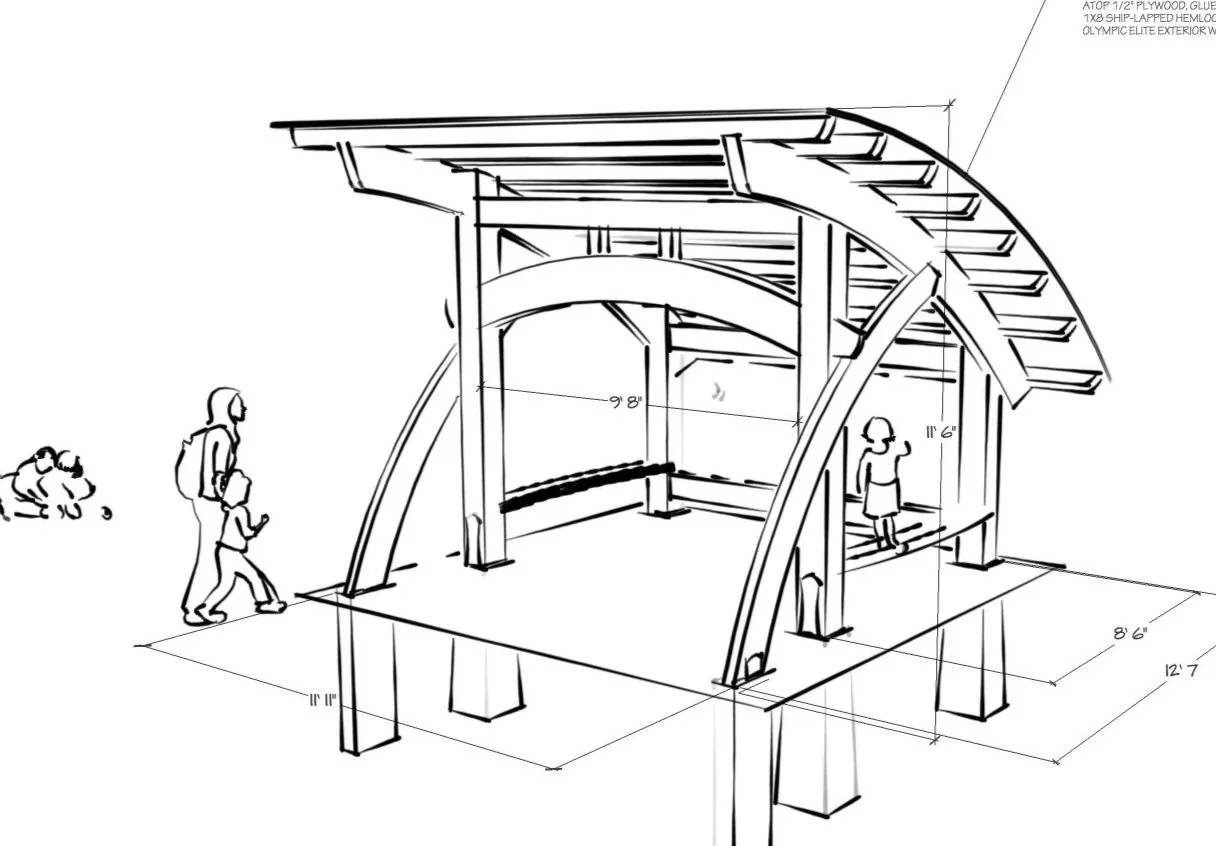
The next step is usually conceptual design. If what you’re aiming for is similar to a project we’ve already completed, this can be brief. However, I’m just as happy to work up more than one concept for you, and to go thru necessary iterations. I will require a fee for this effort. The result is a conceptual model with which we can determine the scope of work and produce accurate costs.
3. Proposal
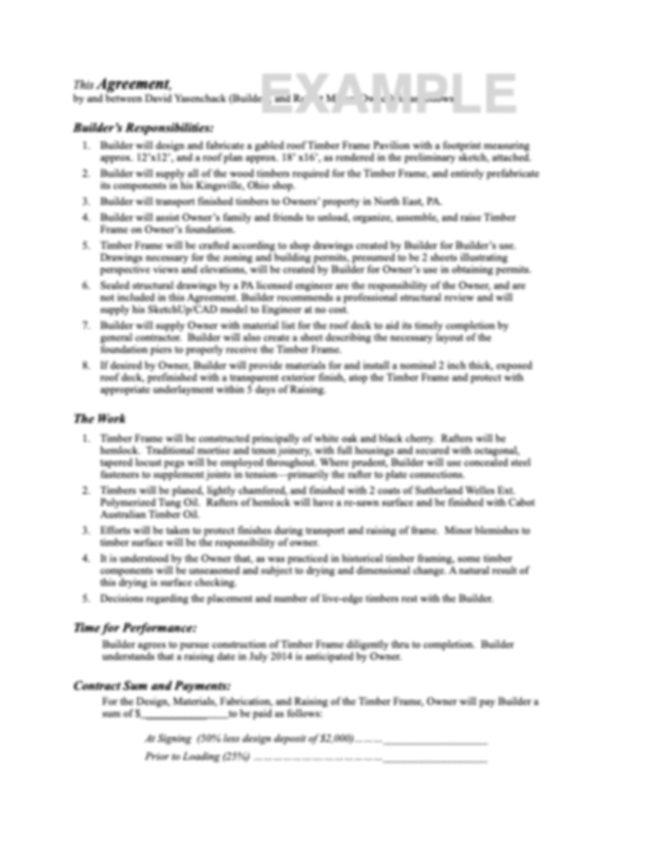
With a sharpened pencil I then create a proposal which details the work I will do and the scope of our project. It will include materials, finishes, our responsibilities, schedules, and payments. Following the earlier conceptual design, we usually accomplish the balance of a timber frame project for a single fixed fee. (Some items, such as delivery and raising, can be tough to pin down at this stage, so its often fair to address those separately.)
4. Preparation
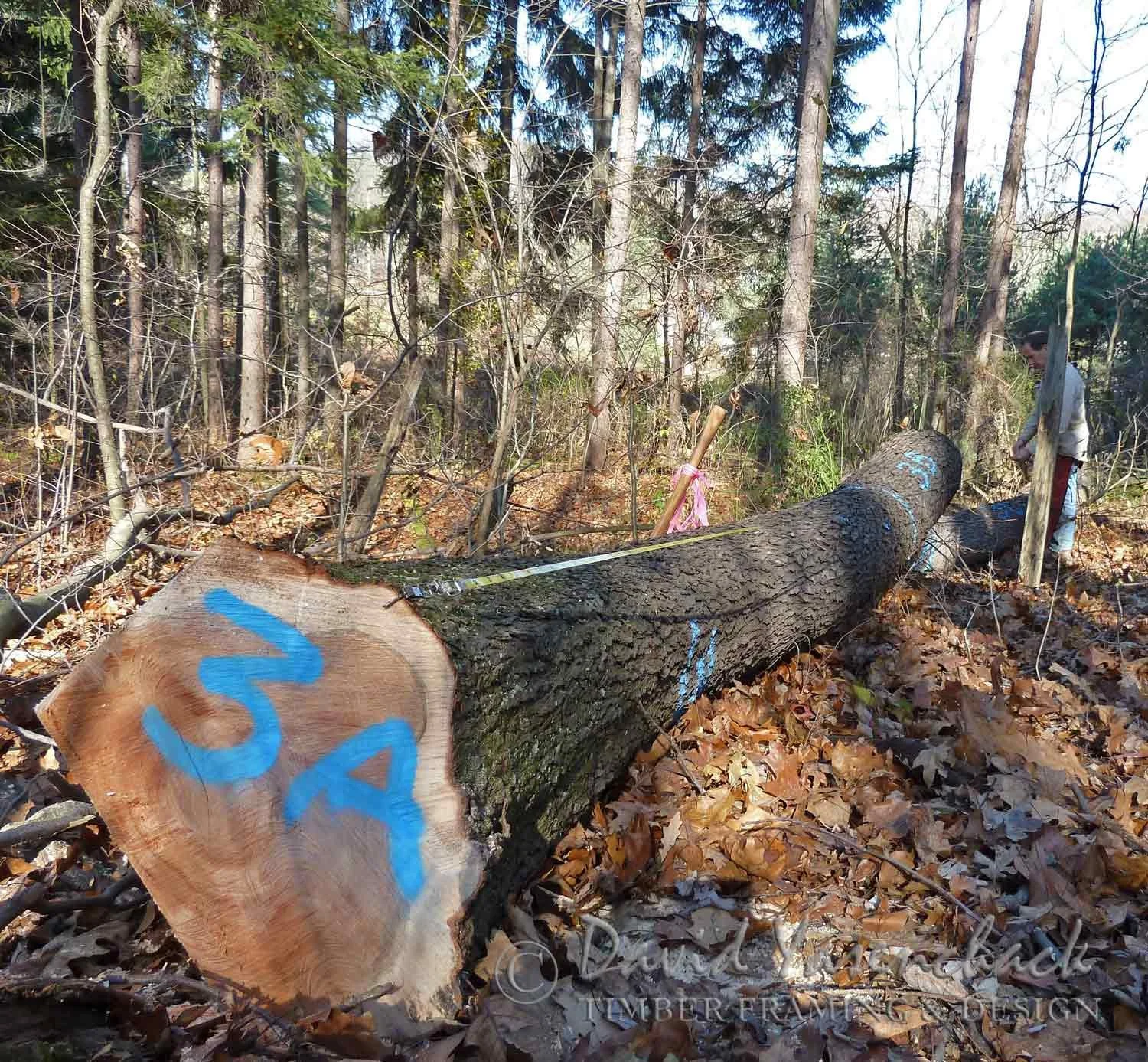
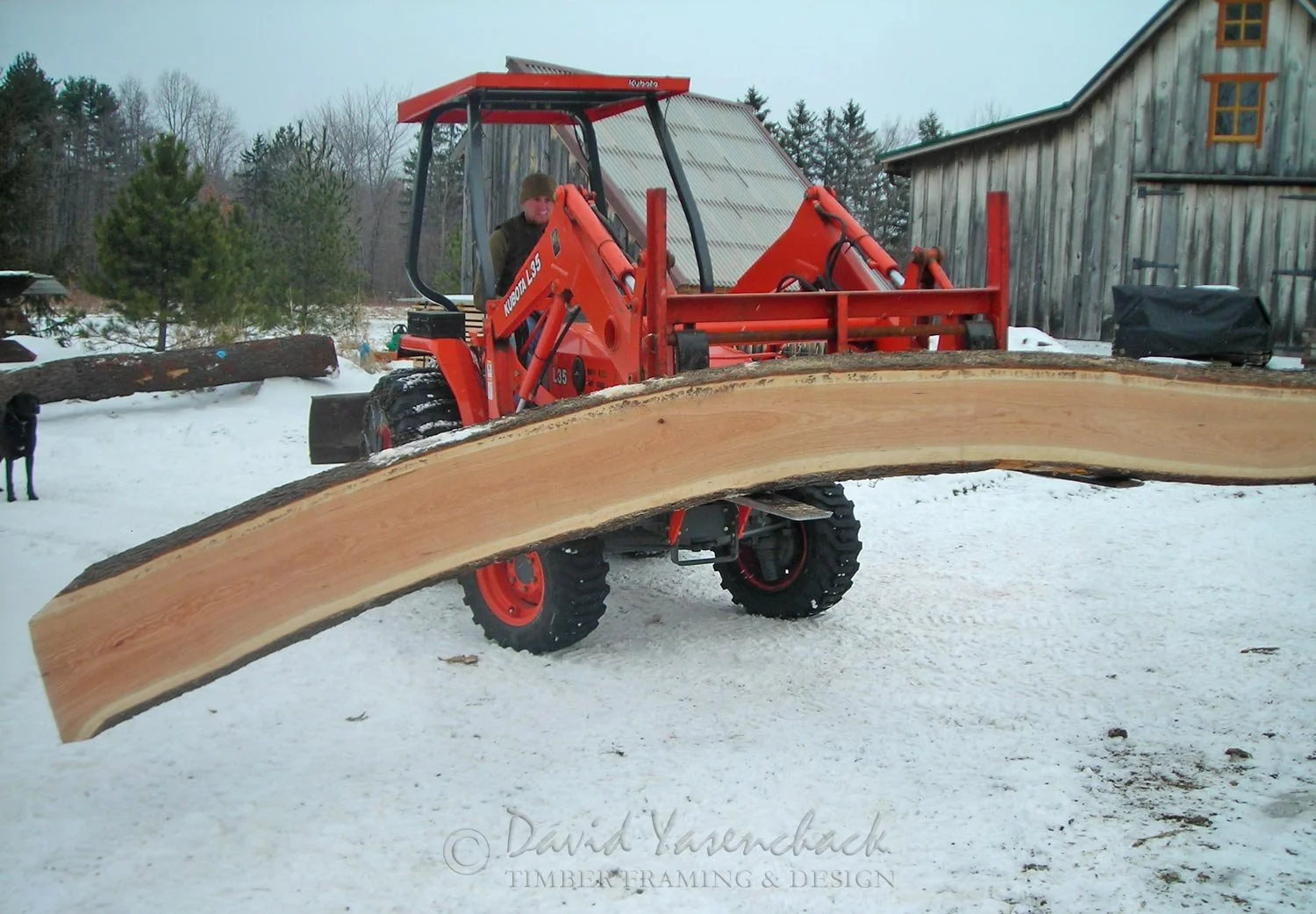
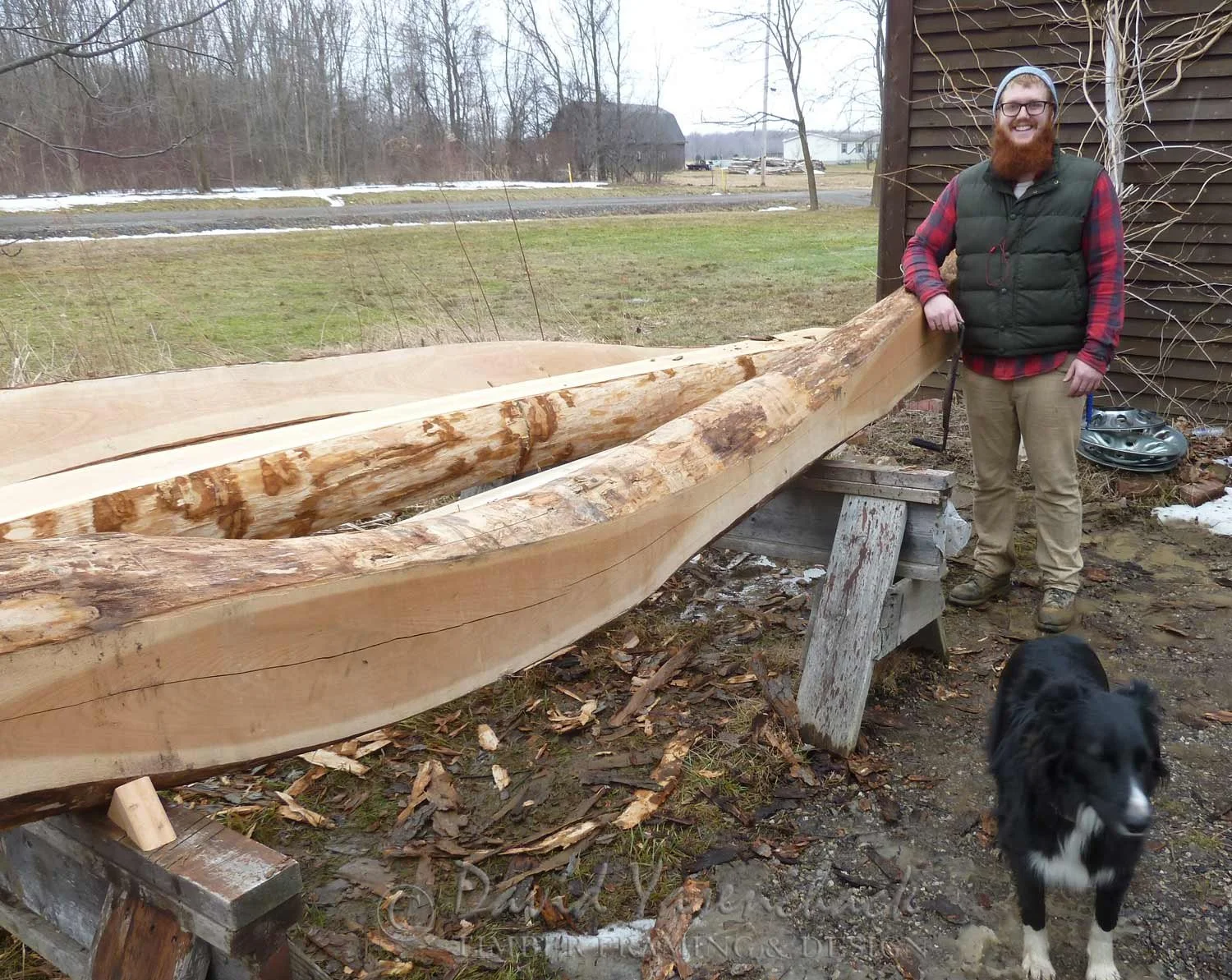
Its here we finally begin gathering and selecting and sawing materials for the timber frame. This begins in our own forest, and it occasionally occurs on the land of nearby clients. Sometimes there is enough time in the schedule to allow certain timbers to air-dry.
We also begin drafting construction documents, which can be relatively simple for small, backyard projects, or more involved when required by local authorities. Often the client is working with an architect who shoulders this work. When engineering is needed we most often turn to FireTower Engineering.
The gathering and preparing of materials is a step unique to our practice. It requires it’s own tools and equipment, and different skills and attention. More than one observer has pointed out it makes our timber framing practice less efficient. Yet there seems no other way to deliver the outcomes we do.
5. Fabrication
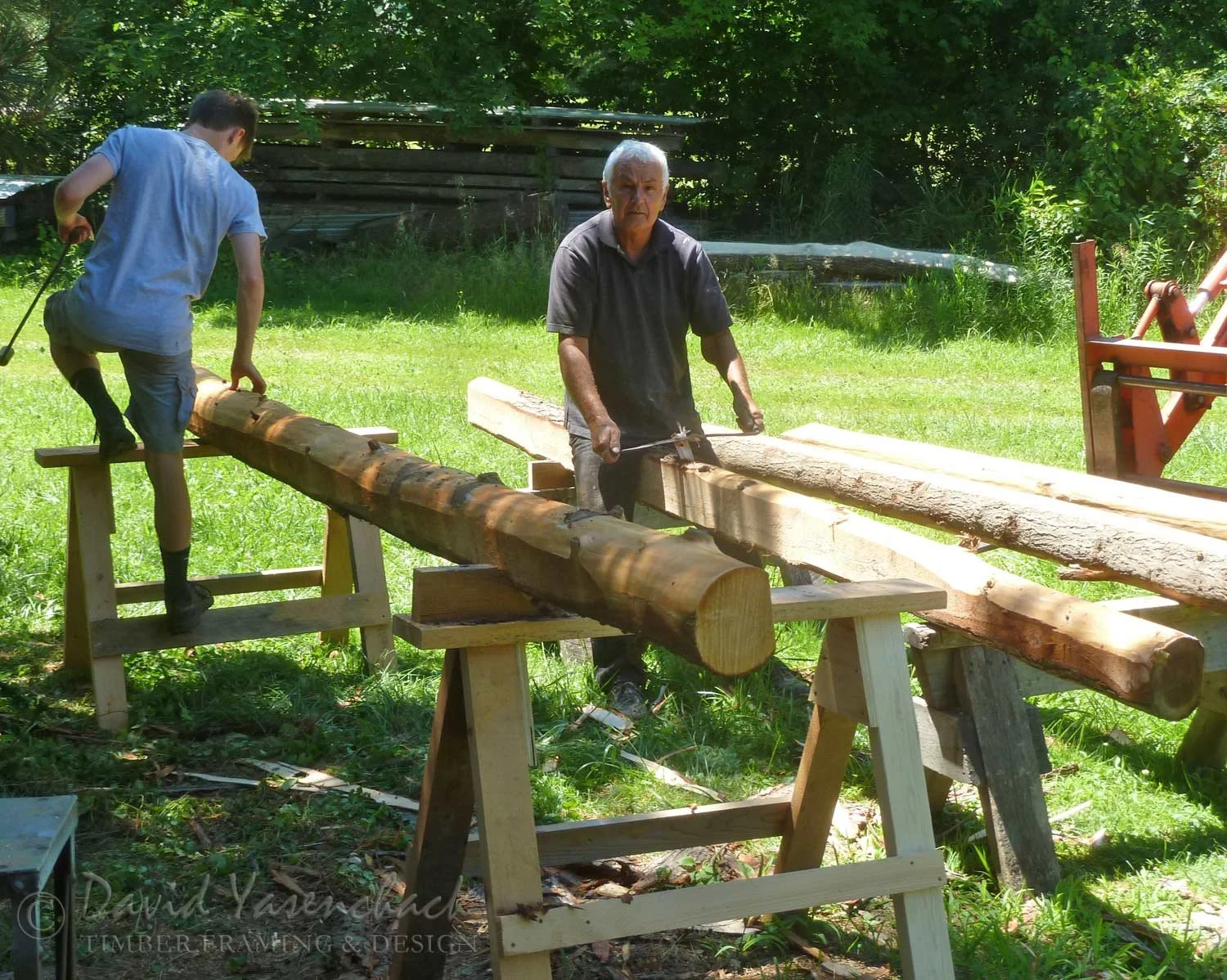
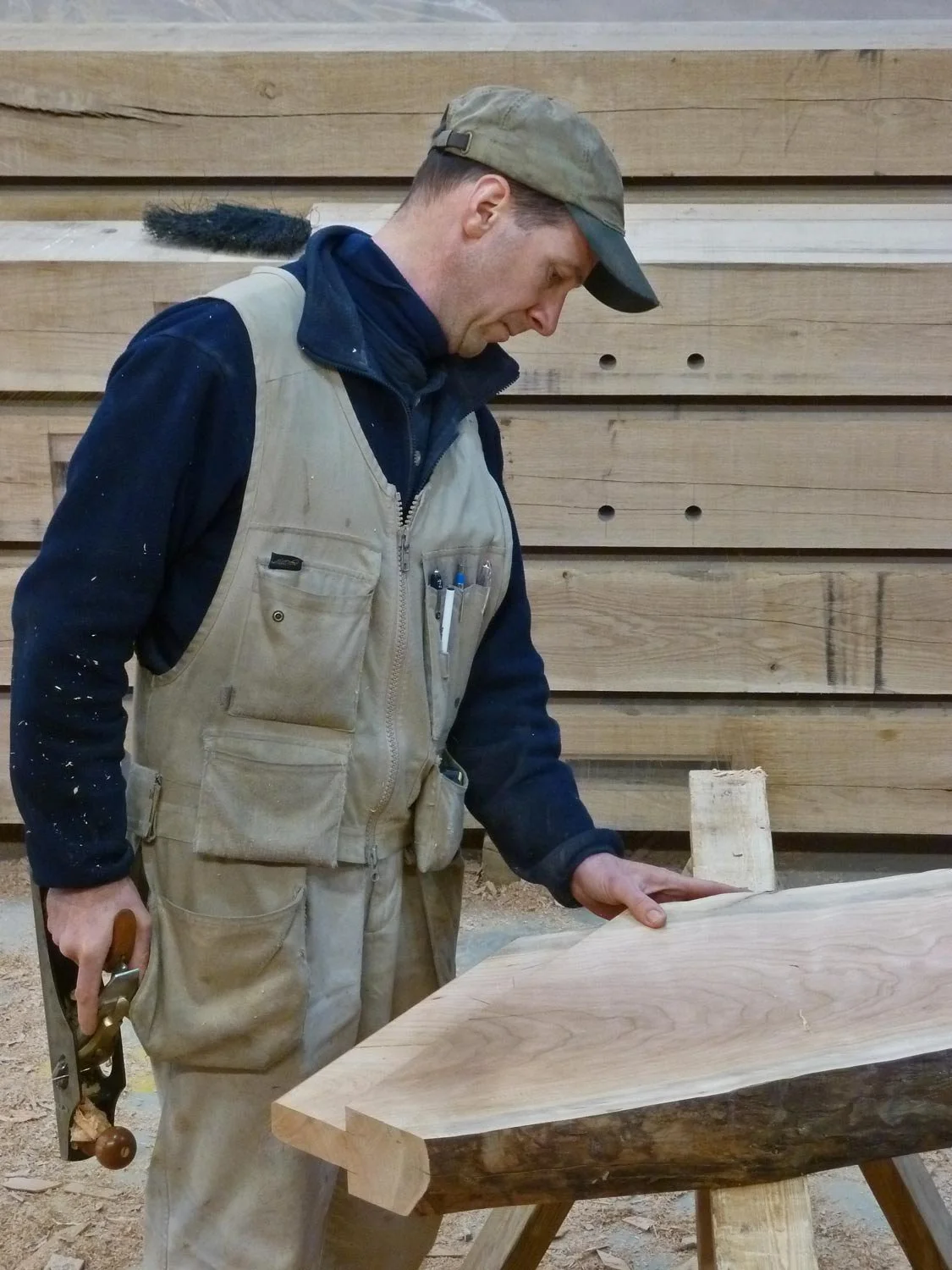
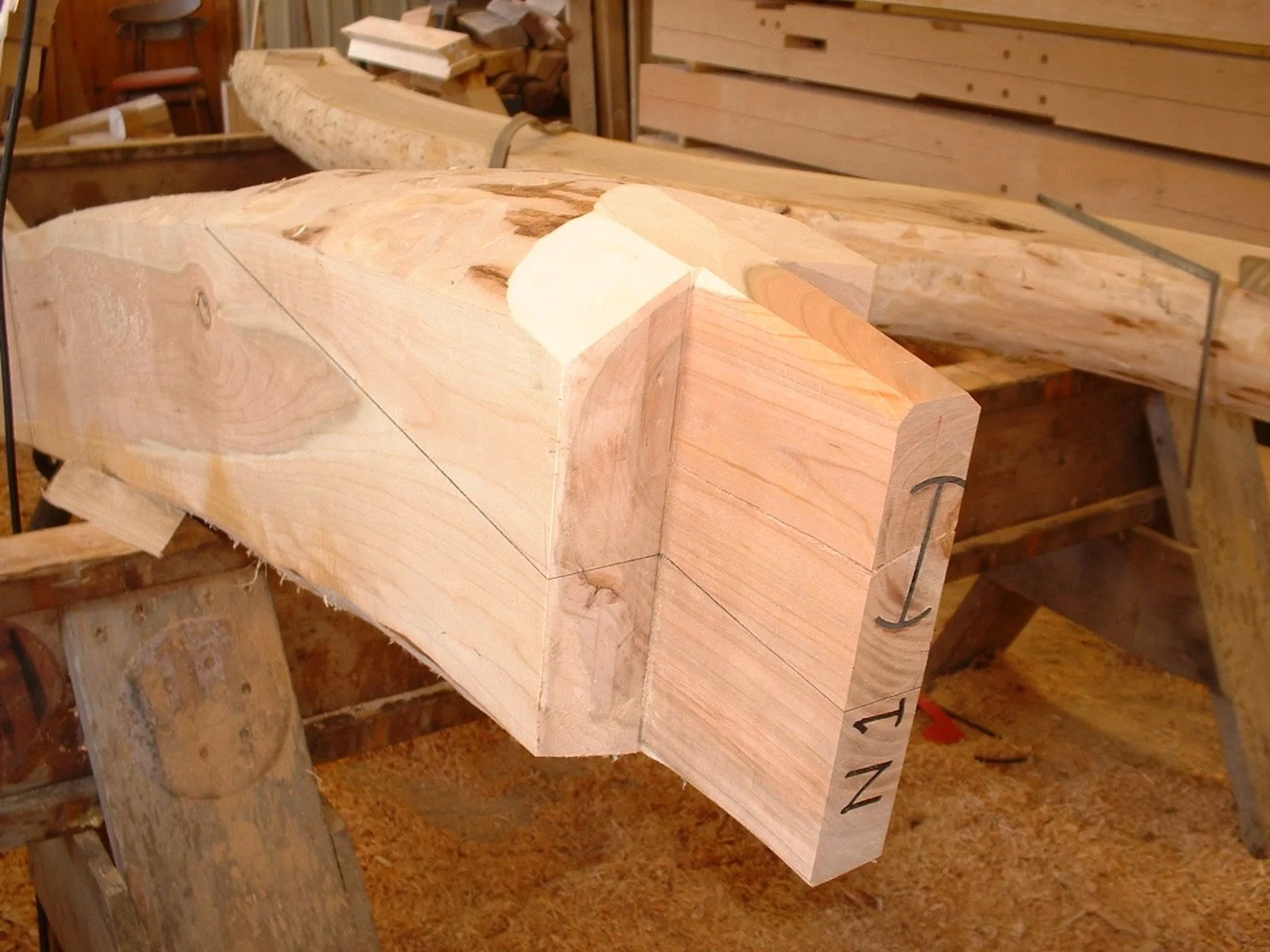
We bring timbers selected for your project into our shop and begin the practice of traditional layout and joinery. We enjoy this, we’re good at it, and you’re welcome to visit amid the dust and chips.
6. Raising
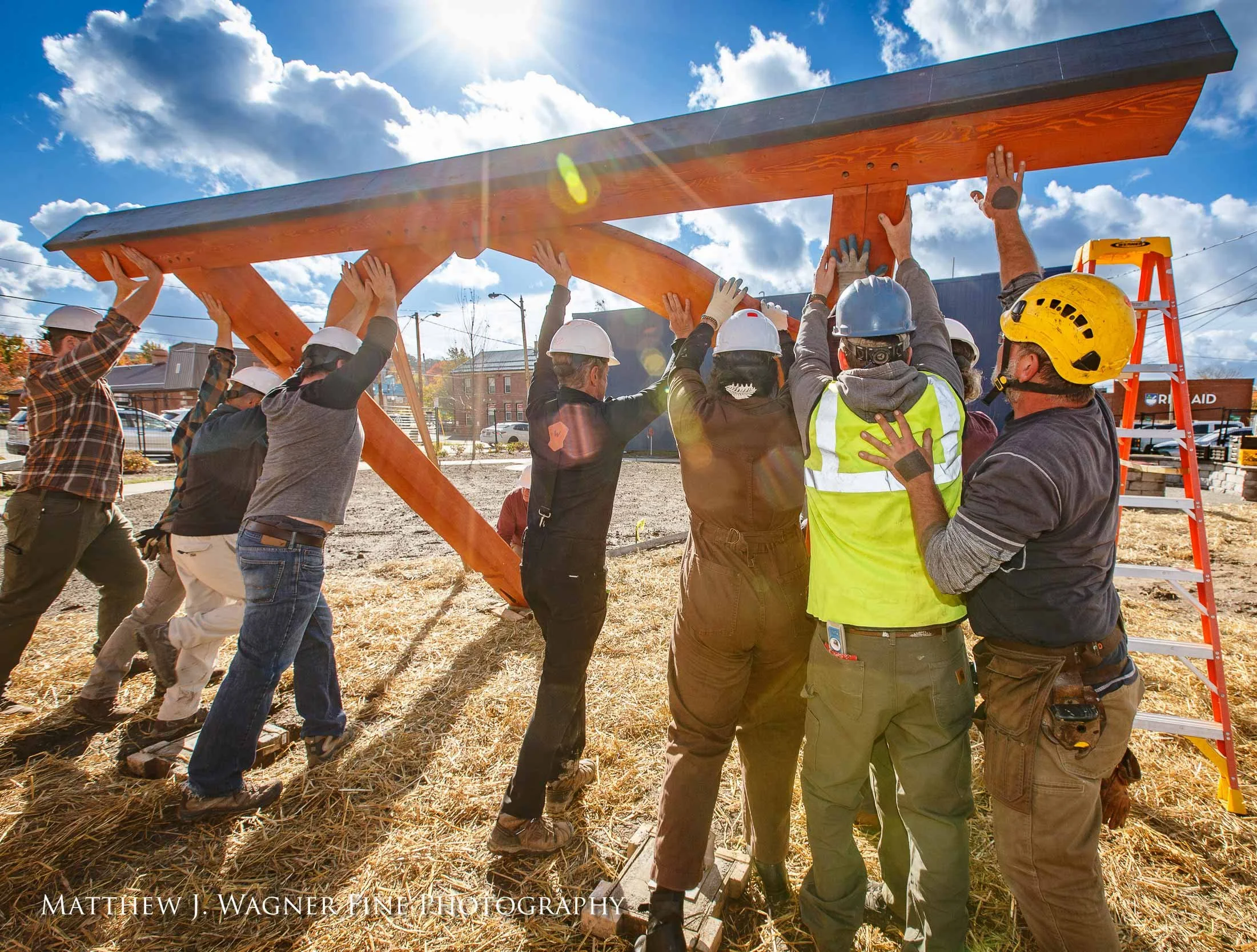
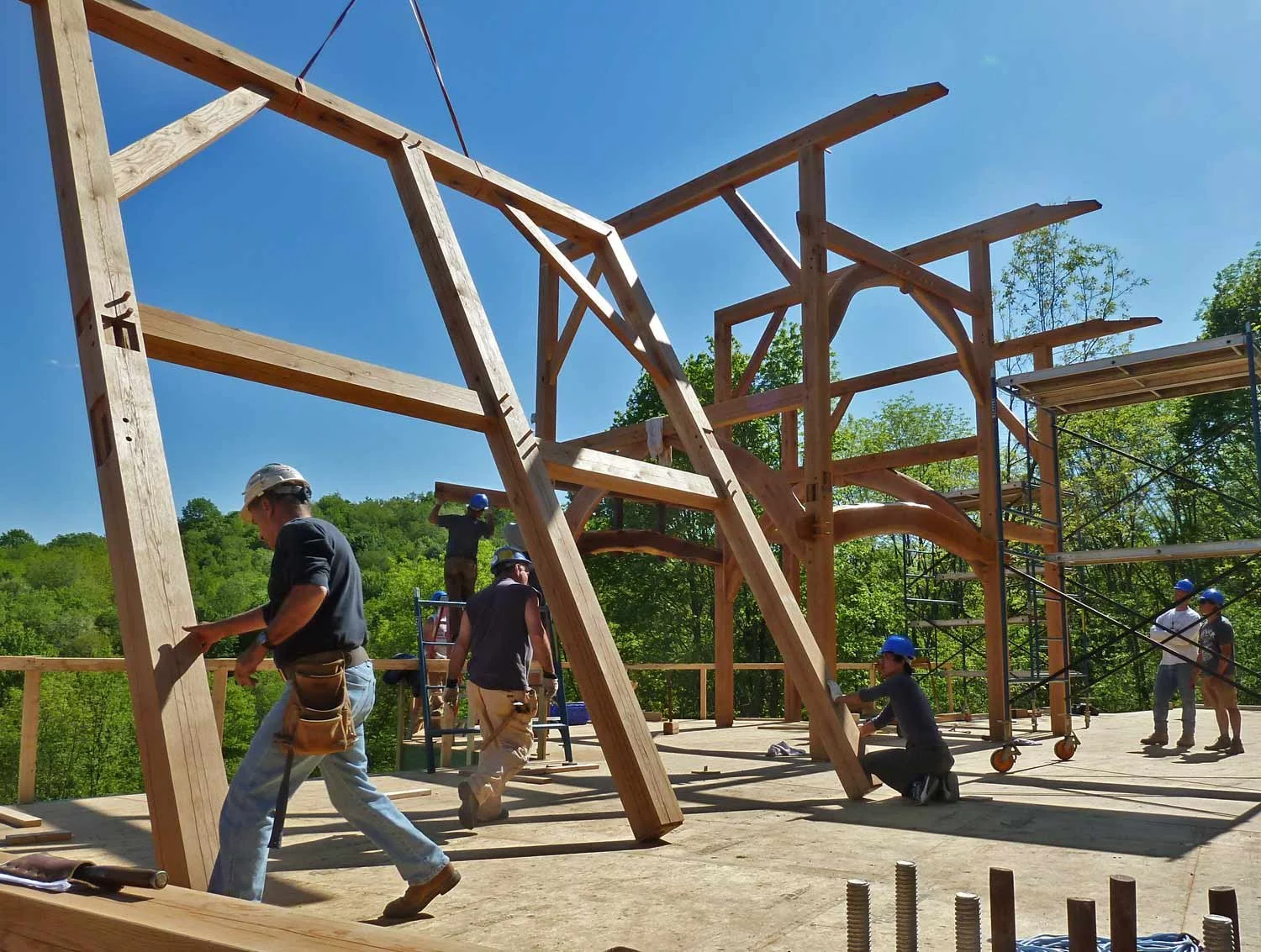
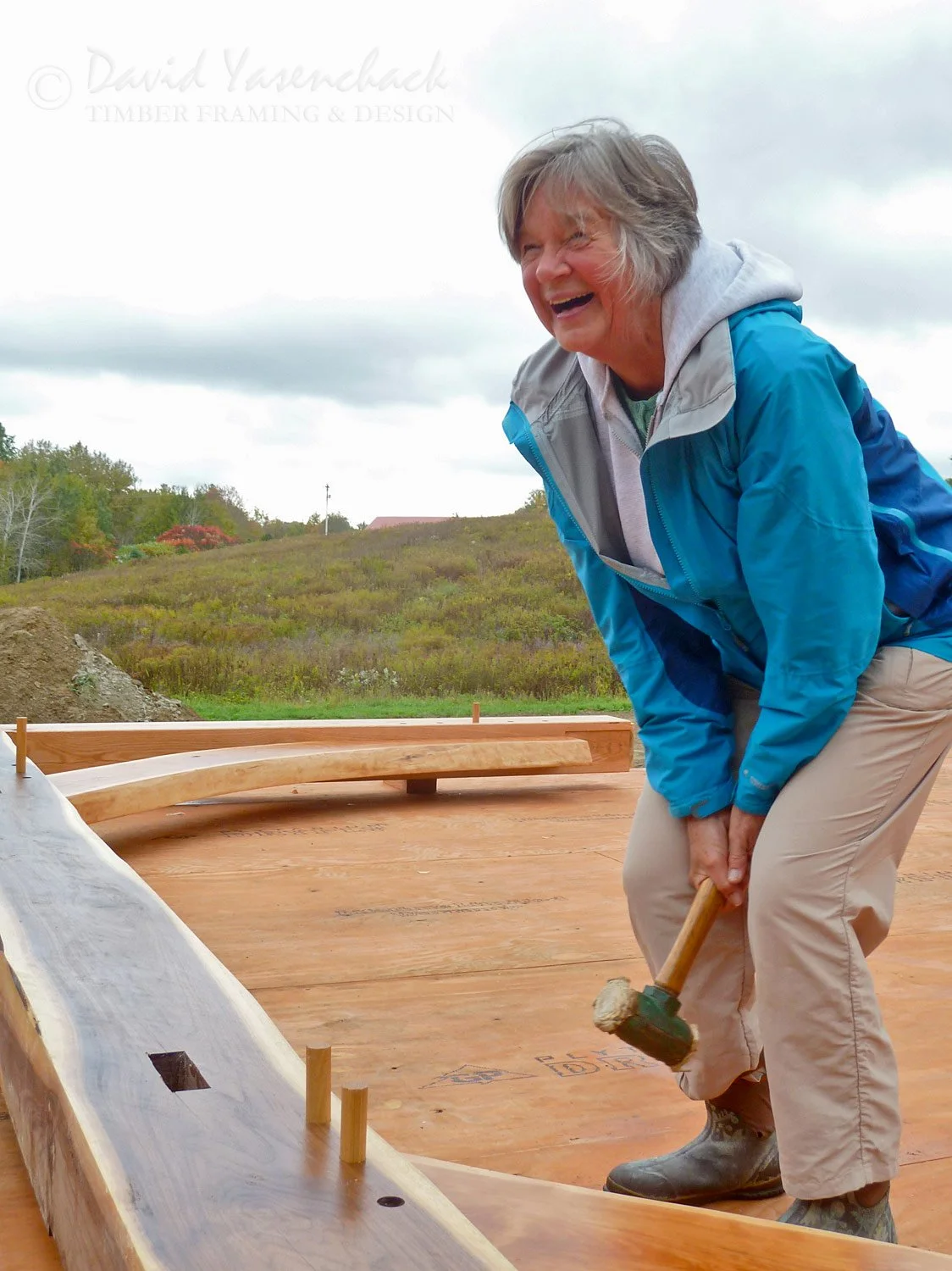
It’s an understatement to say we enjoy raising our frames. For large frames far from our shop, this may involve partnering with your contractor and their on-site resources. The raising is often the most thrilling phase for both parties, and so I expect to coordinate closely with you and yours to make the assembly and raising both safe* and wonderfully memorable.
*We create a customized, detailed, & illustrated raising plan for nearly every project to ensure safe practices and to maximize cooperation.