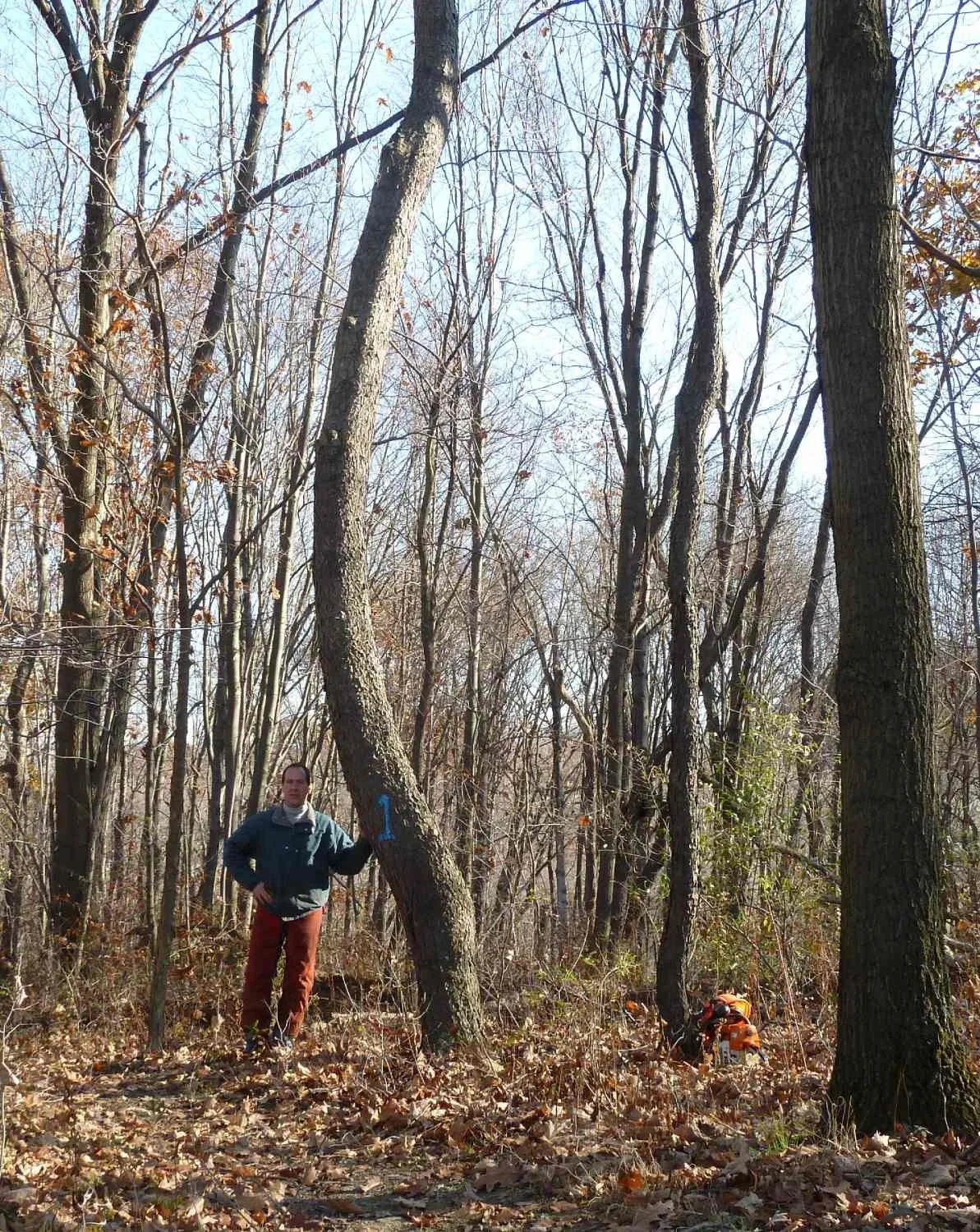
Person standing beside a blue-marked tree in a leaf-covered deciduous forest, with an orange chainsaw on the ground nearby.
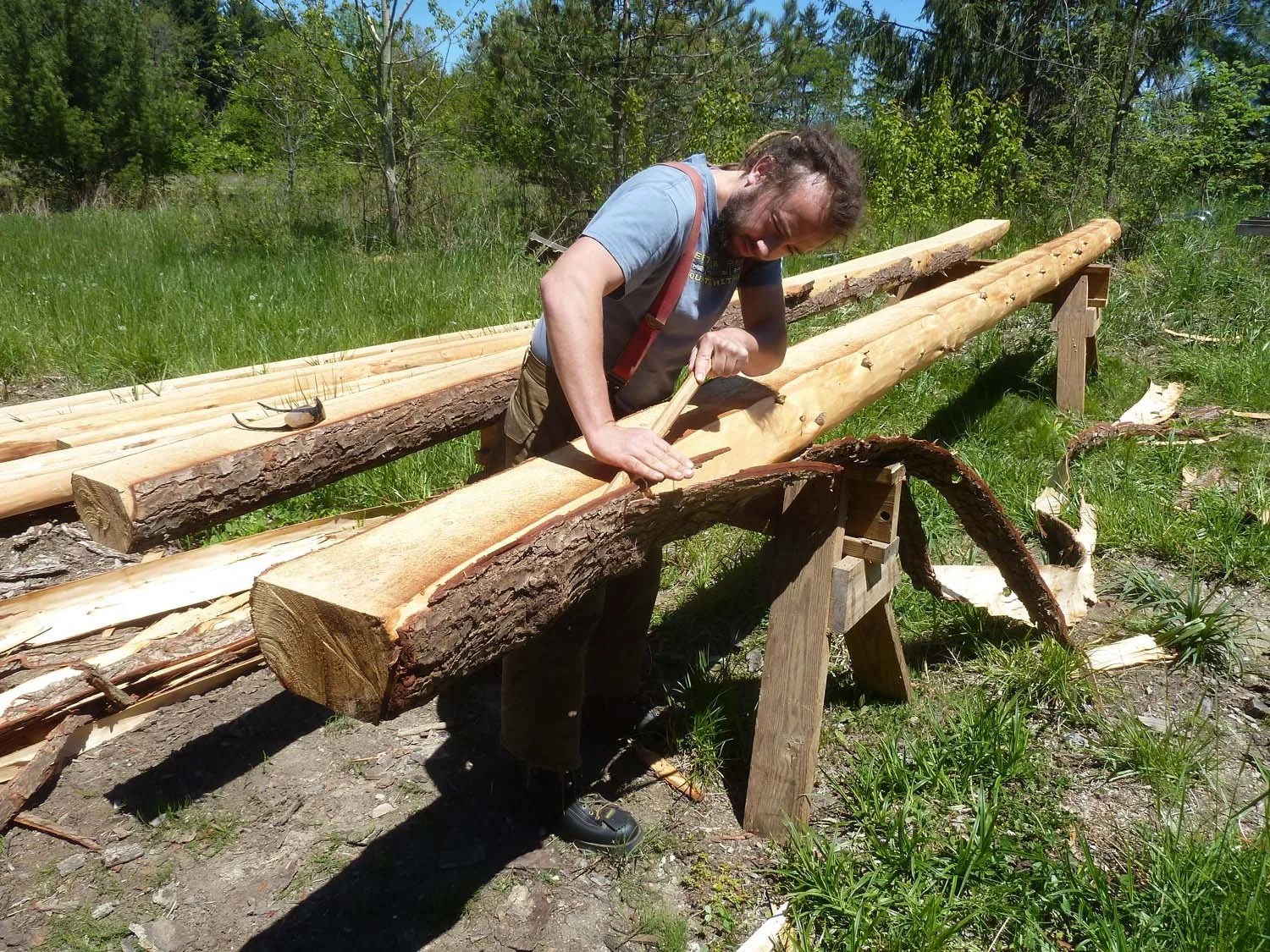
Helper hand-peeling bark from hemlock log to be timber frame rafter

How We Practice the Craft

Our craft really begins in the forest, with the selection and careful removal of trees. We then convert logs into timbers and lumber, all the while trying to reveal their best potential qualities.
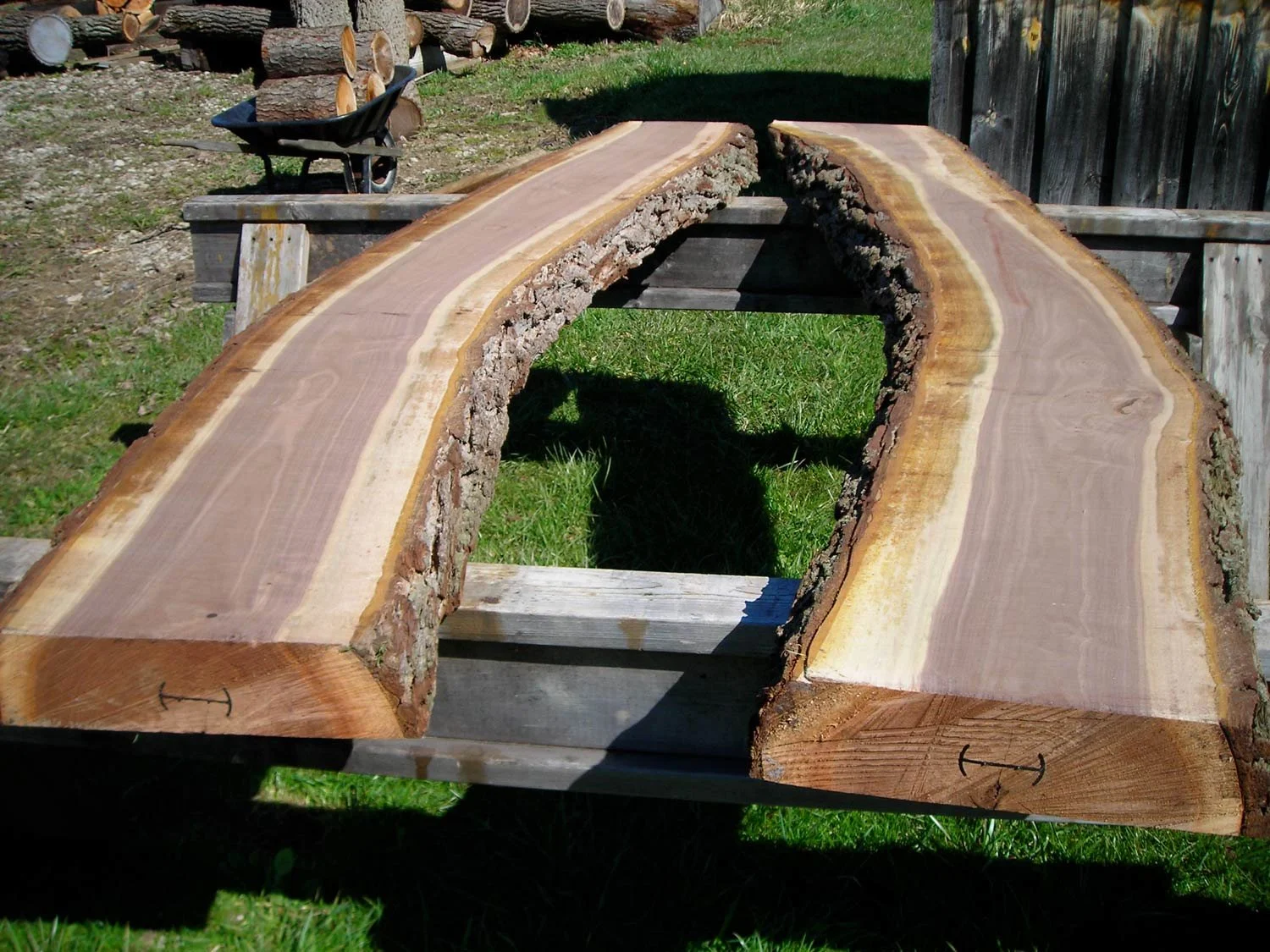
Two live-edge walnut flitches sawn to be braces in a timber frame
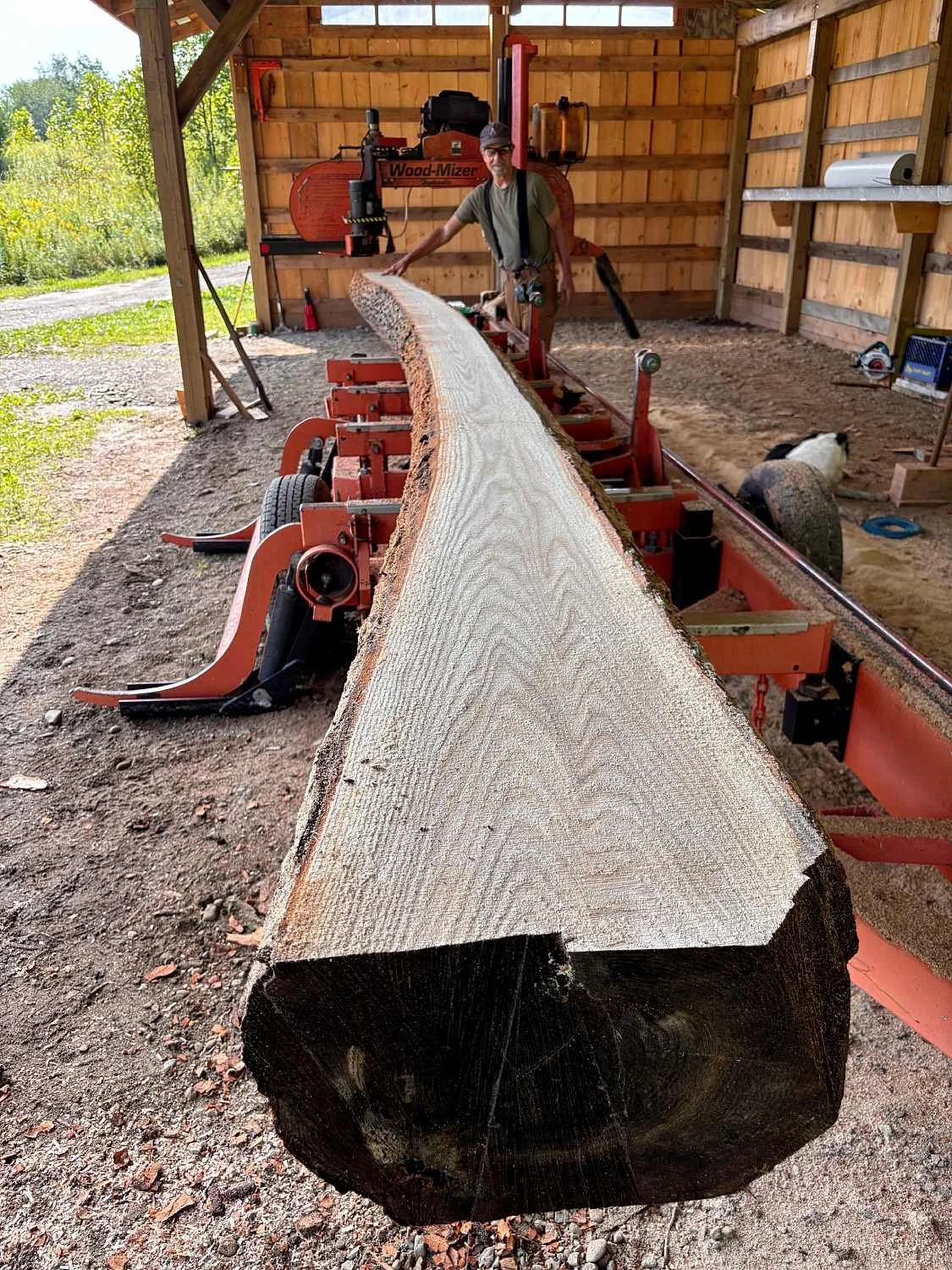
Freshly sawn curved sassafras log on a Woodmizer bandmill
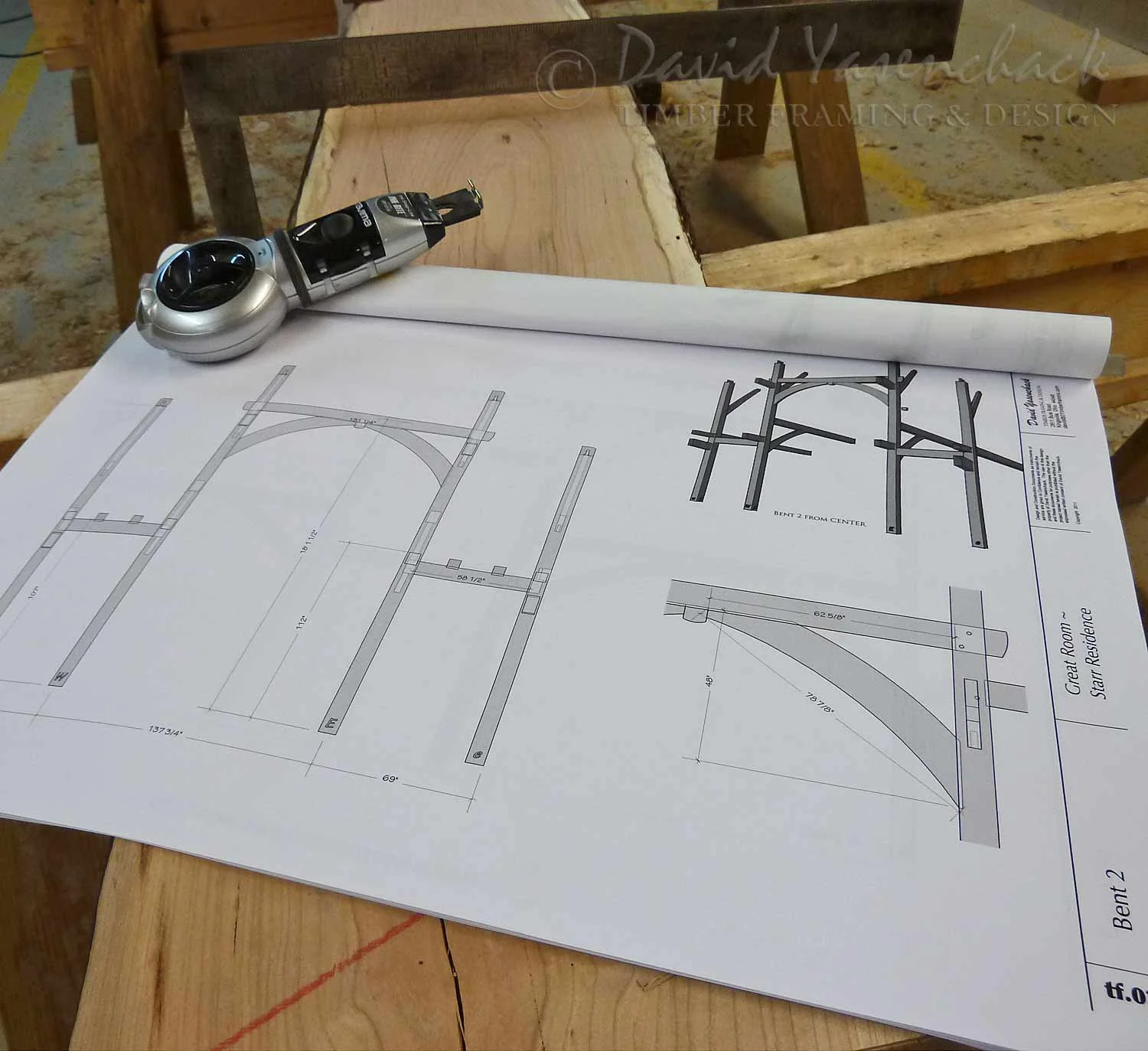
Architectural framing plans and a Japanese ink line on a cherry beam

While gathering materials is an ongoing process, we typically work in our small shop on only one timber frame at a time.
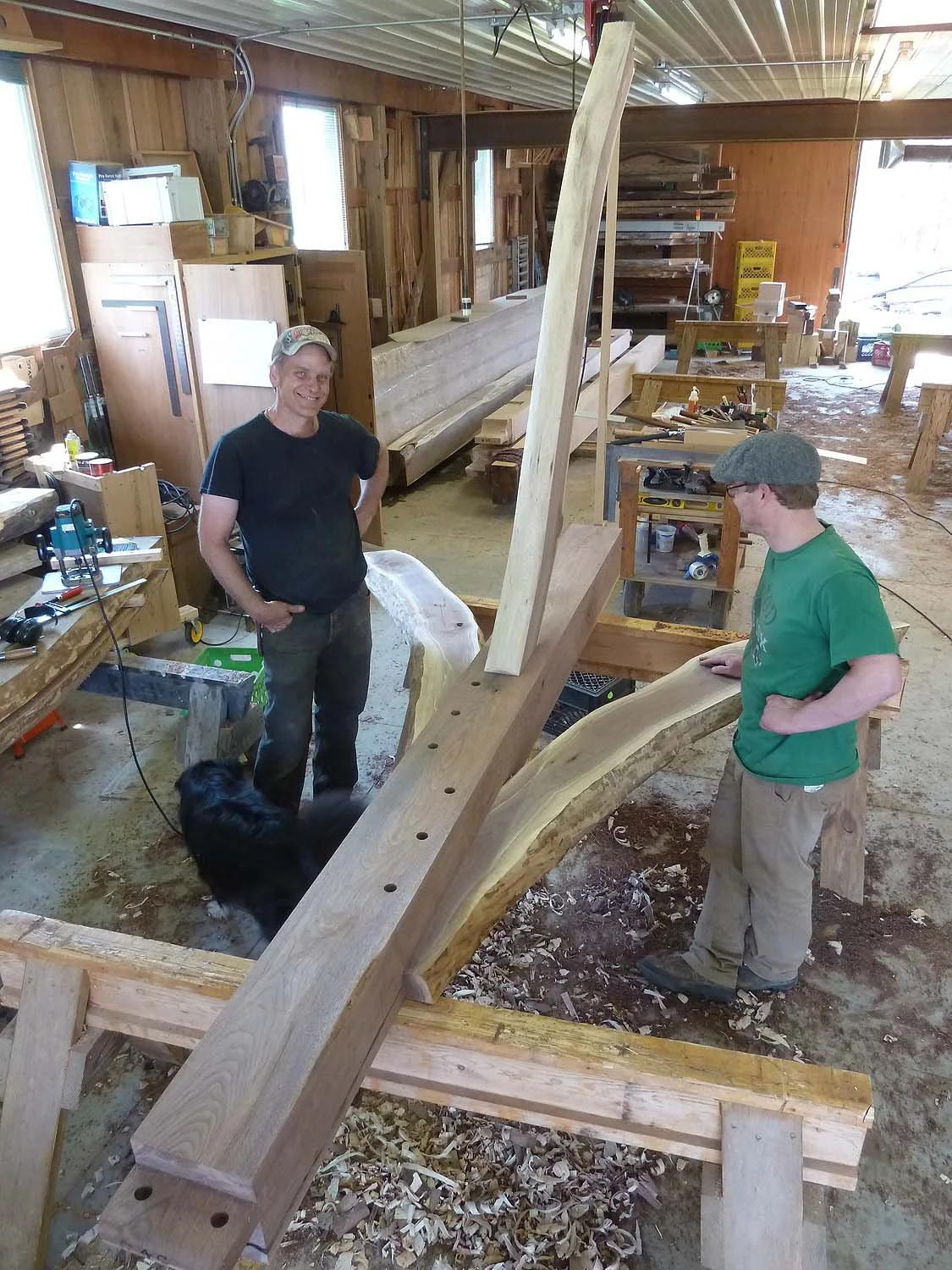
Adam and Charles in the timber frame shop having test-assembled a timber post and live-edge braces
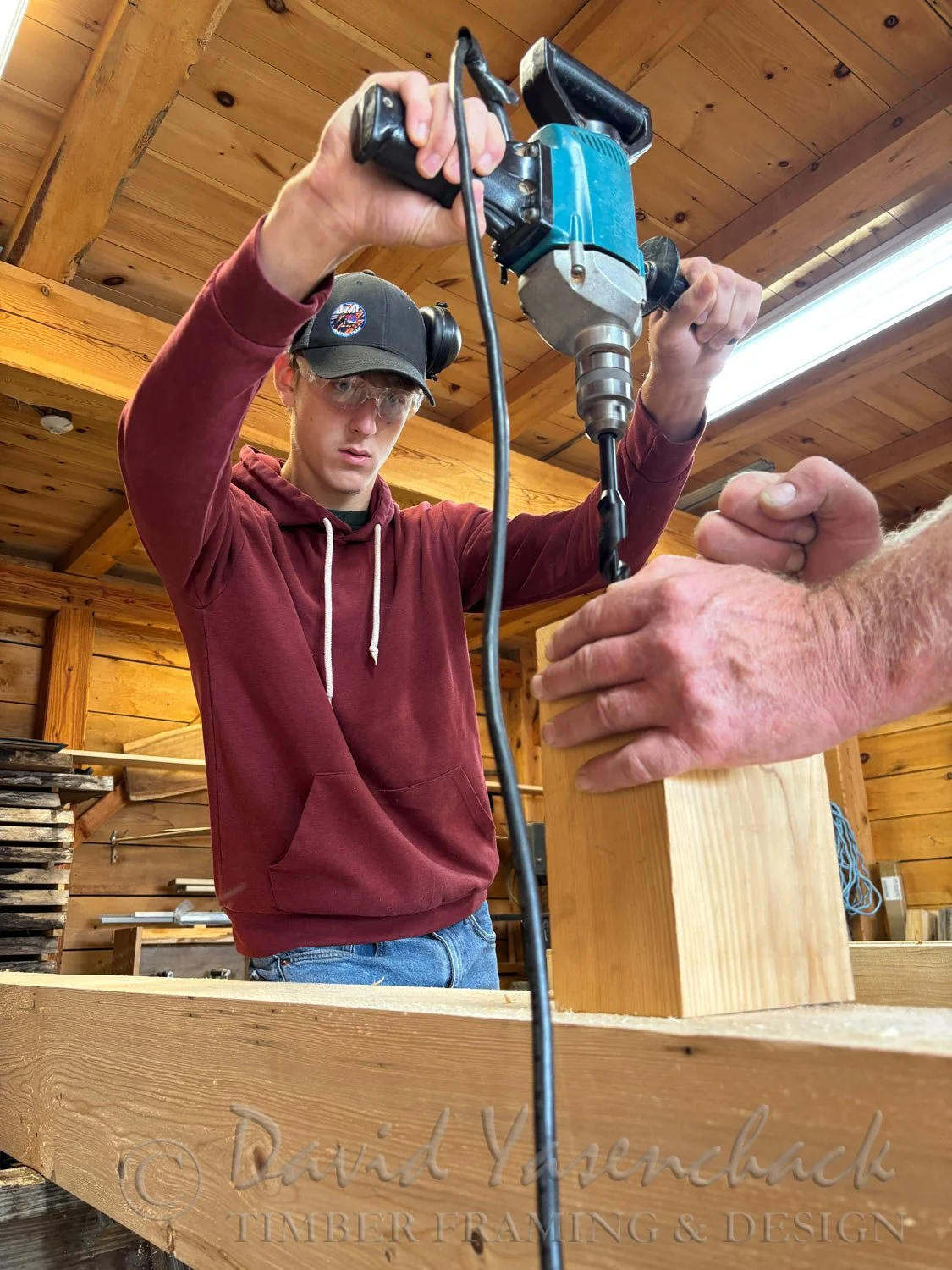
Worker wearing safety glasses and hearing protection uses a power drill to bore into a wooden timber frame.

We use an assortment of power tools and traditional hand tools to accomplish the joinery.

Electric saws, planers, drills and routers are used for the bulk of the shaping.
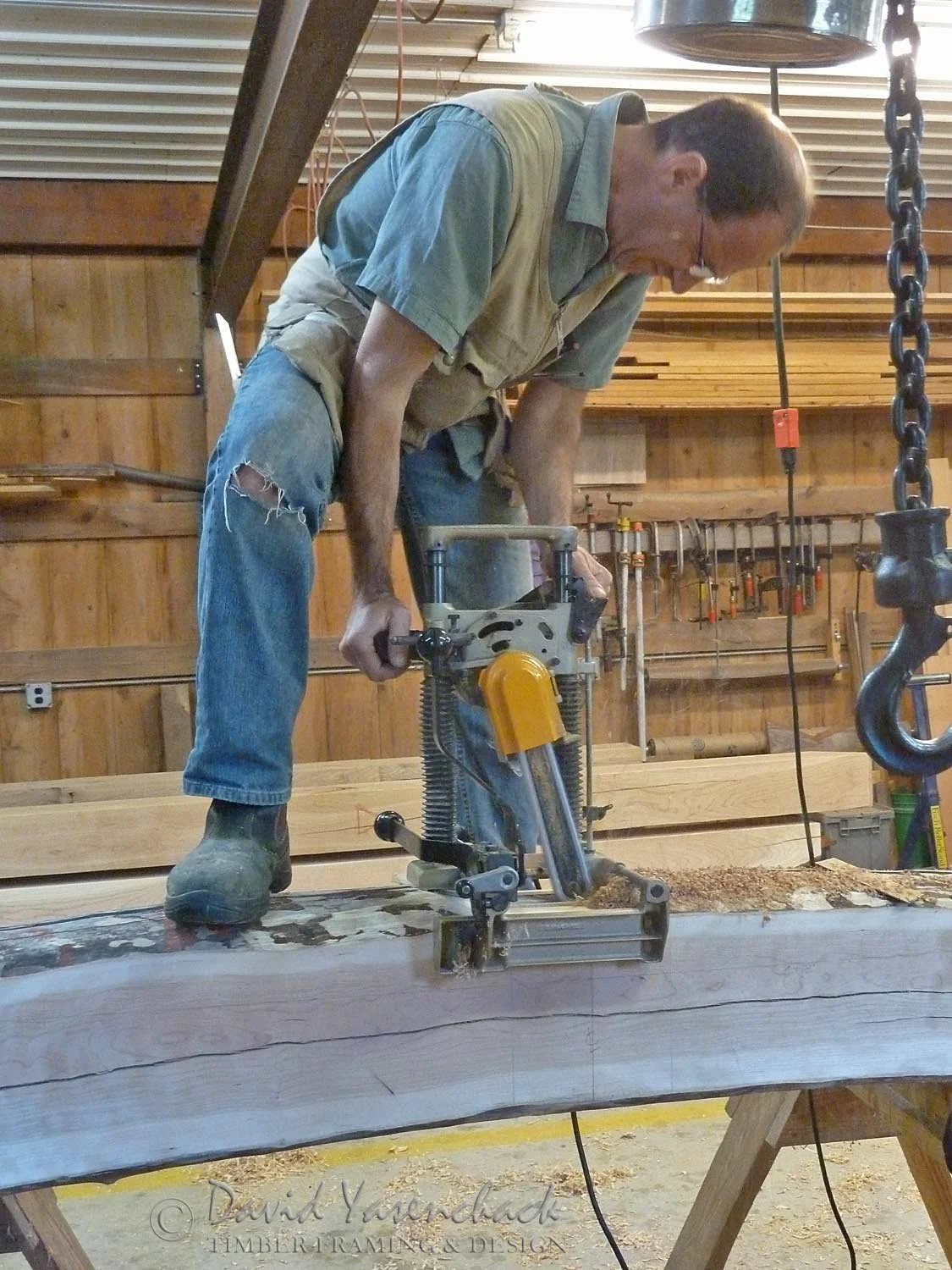
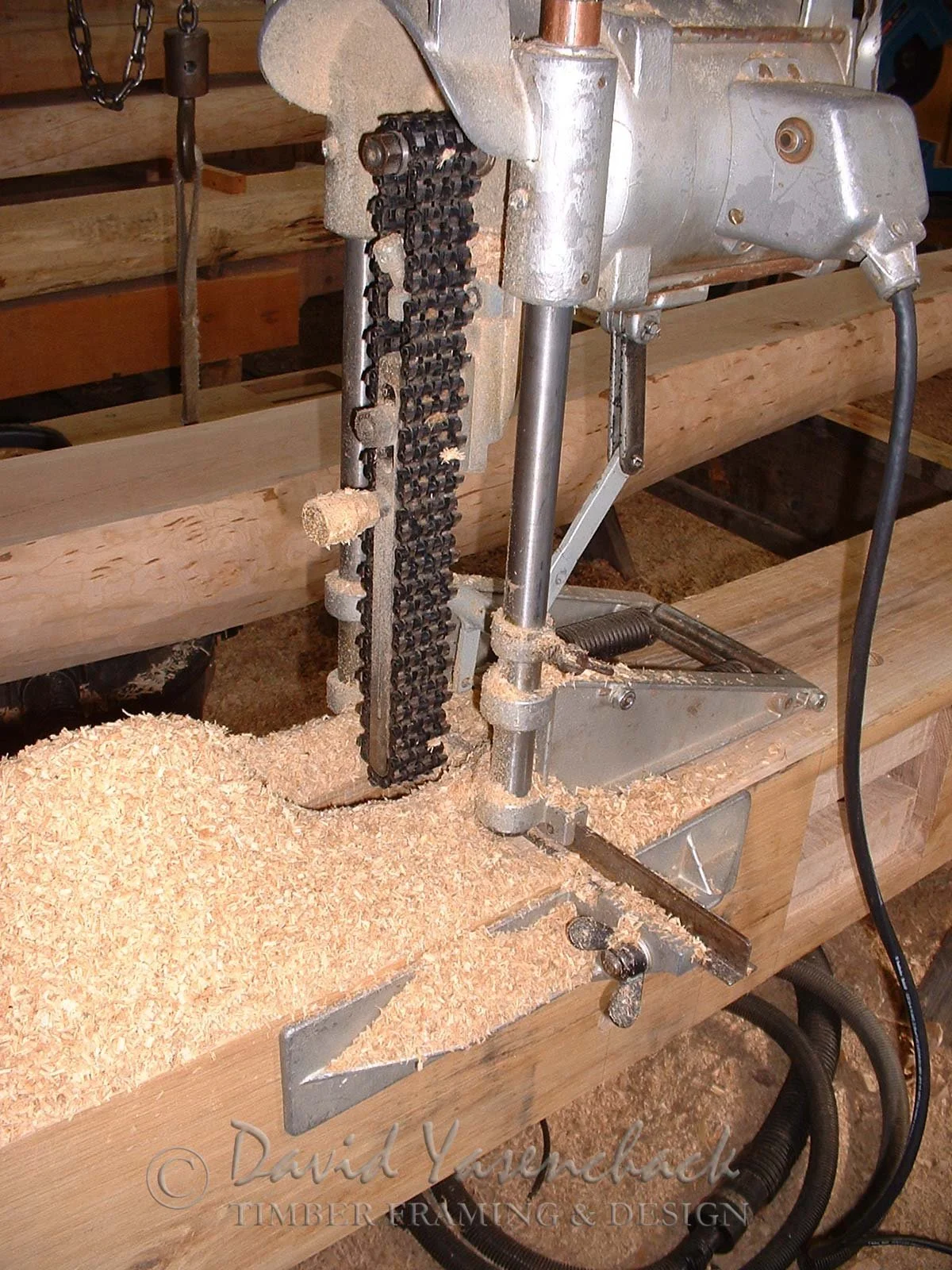
Woodworker using a chain mortiser to create a mortise on a large timber beam in a workshop
Vintage Mafell chain mortiser cutting a mortise in an oak beam, surrounded by sawdust in a timber-framing workshop

The power tool we depend on most is a 1960’s-vintage German-made chain mortiser. The “S” machine, as it was known, is a 3-phase beast of a portable tool. We keep her alive and sharp.
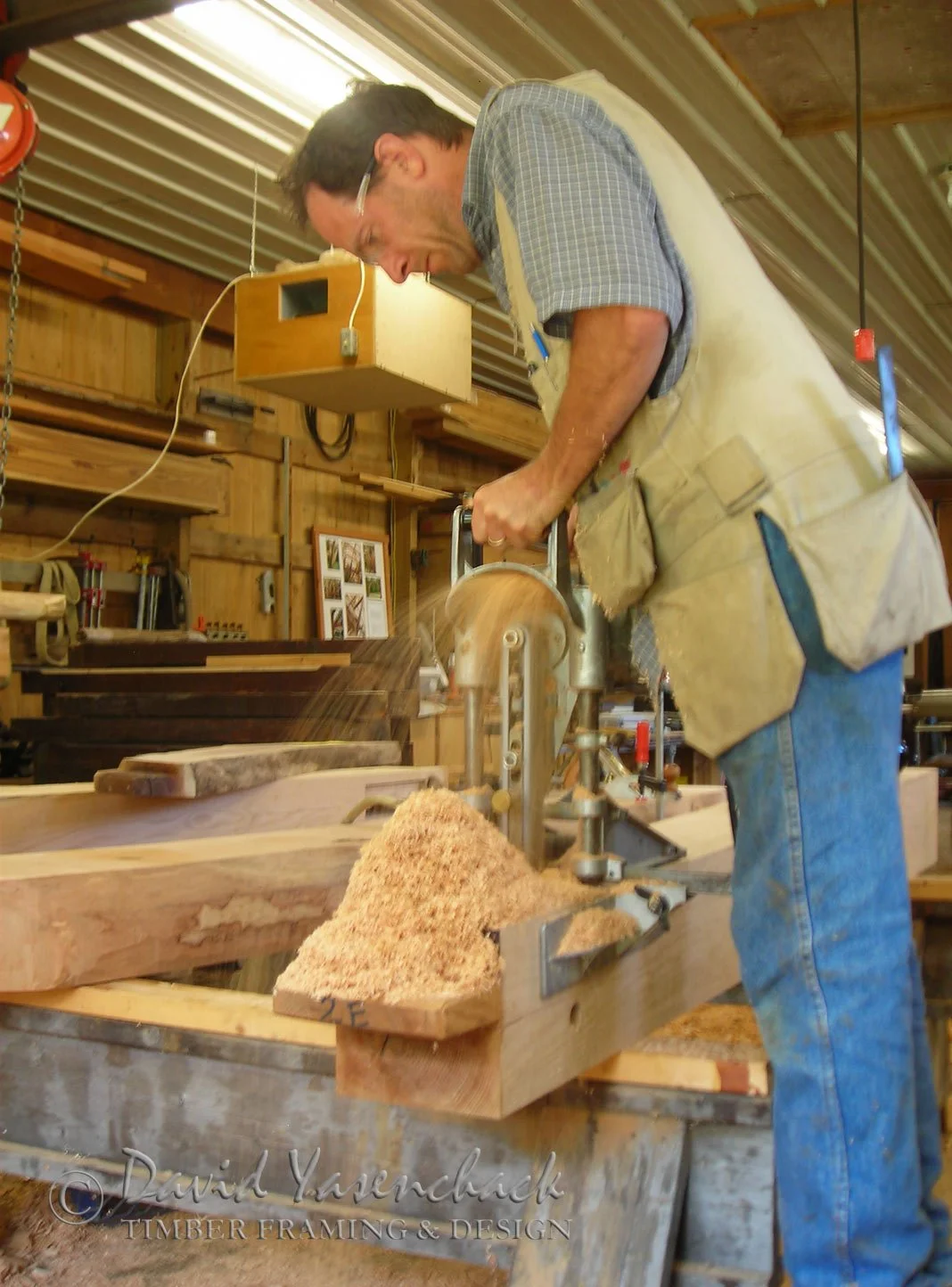
Woodworker operating a vintage Mafell chain mortiser in a timber framing shop
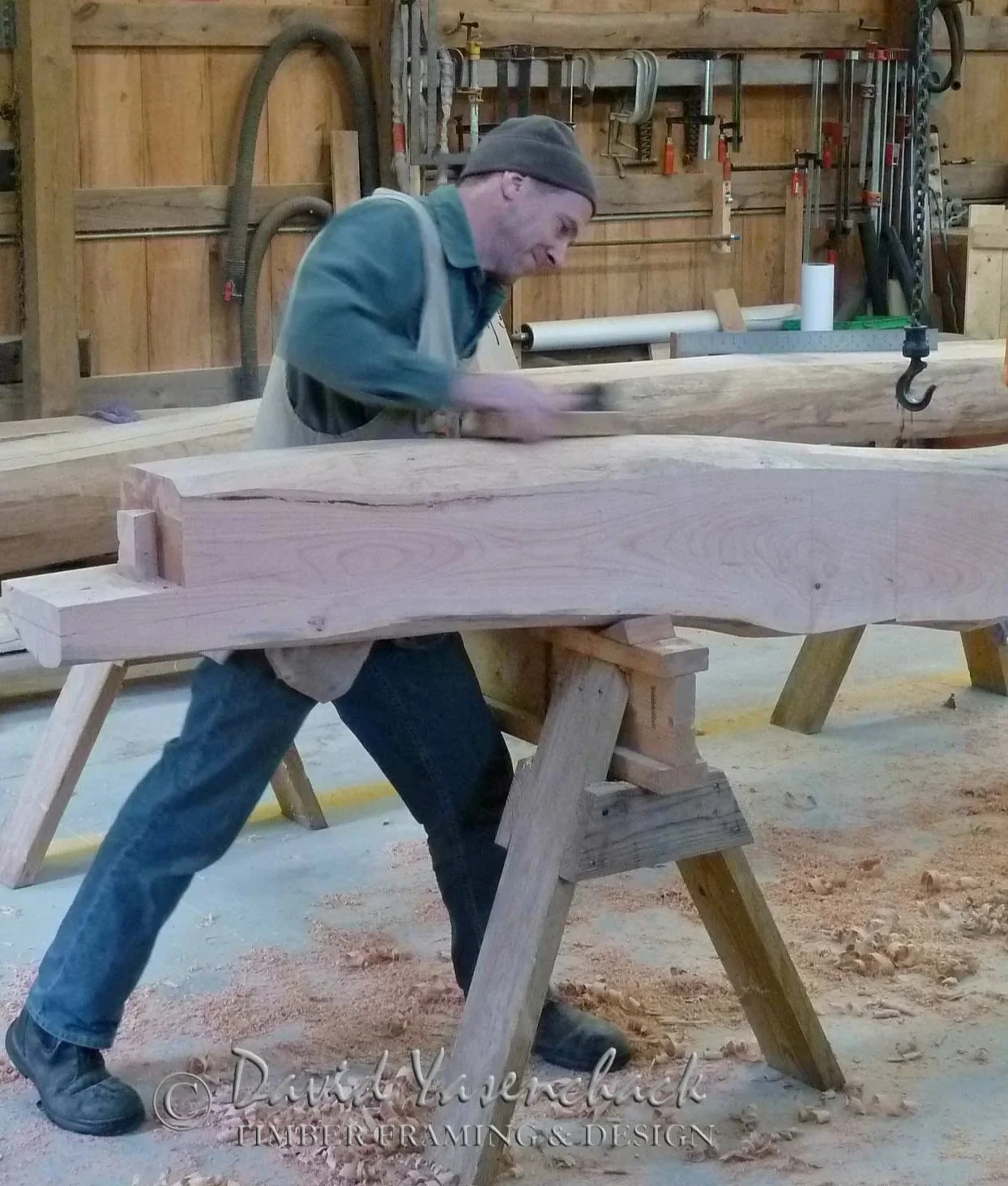
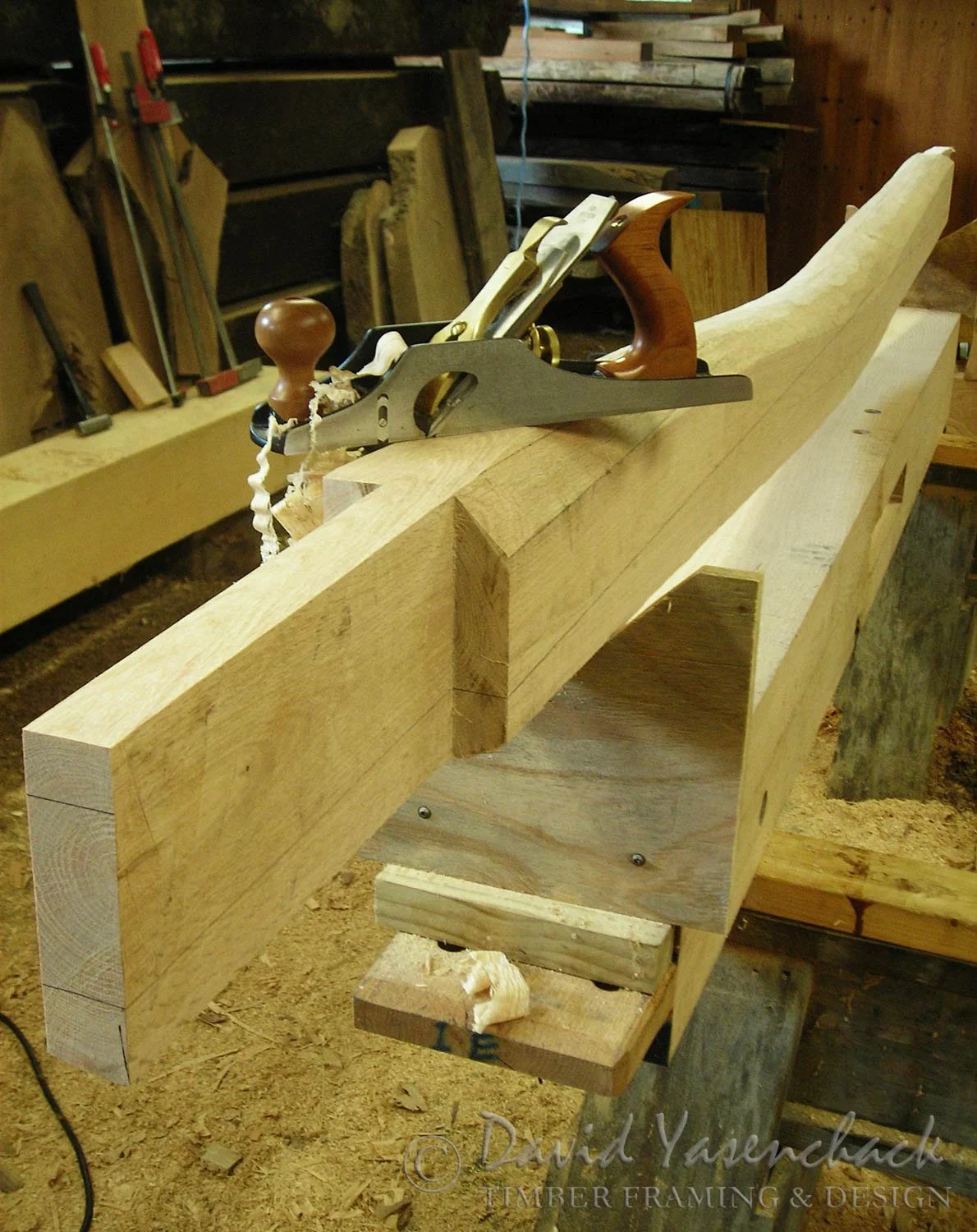
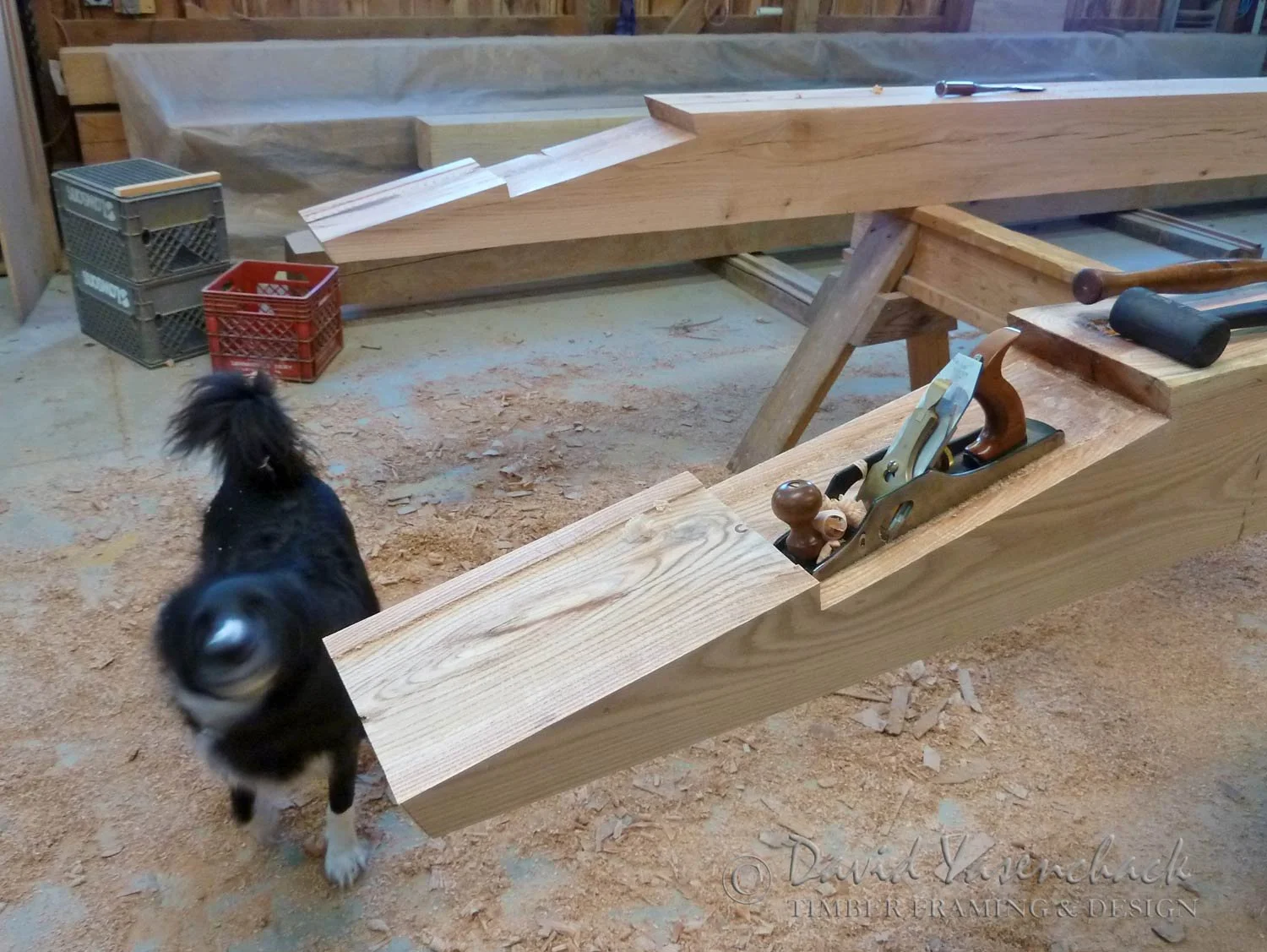
Bench rabbet plane shaping a curved oak beam in a timber framing shop

Tuning to final dimension and tolerances is done by hand with traditional edge tools. Final surface textures are often accomplished by hand as well.
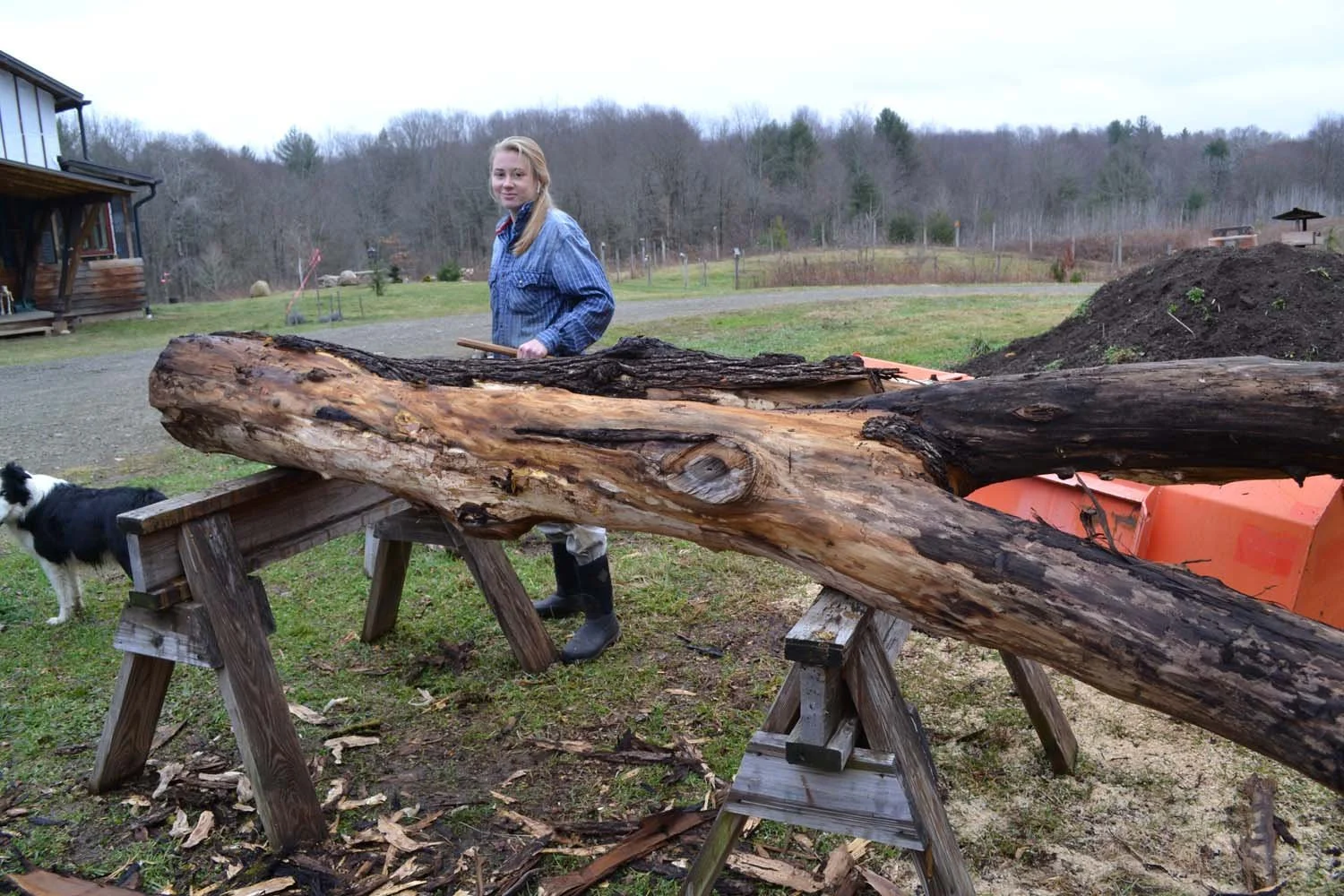
Woman standing behind a large partially carved log supported on sawhorses outdoors, with a dog, cabin, and wooded landscape in the background
Woodworking shop with a hand plane on a timber beam and a black dog in the foreground
Woodworker shaping a large timber beam in a traditional woodworking shop.
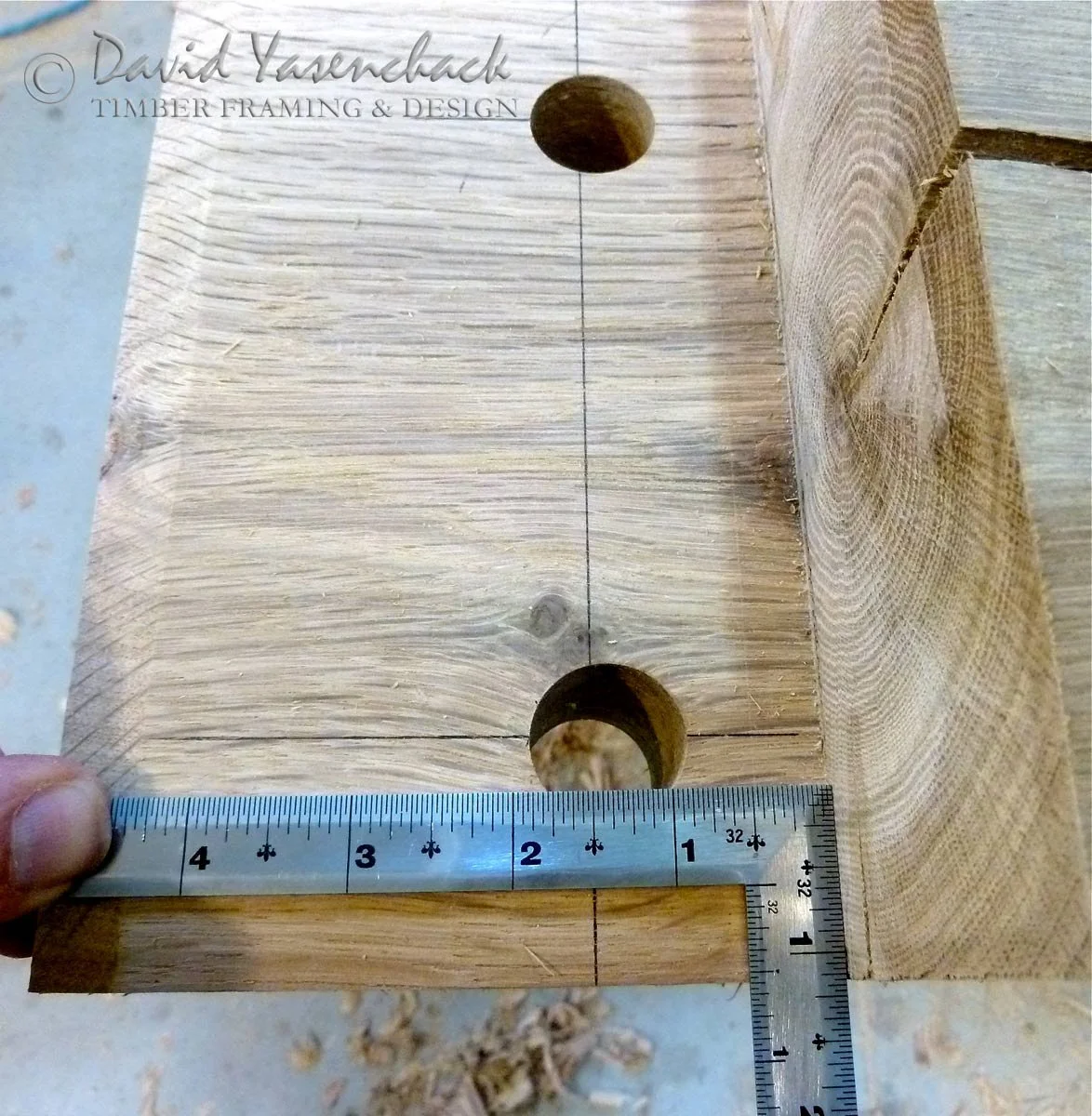
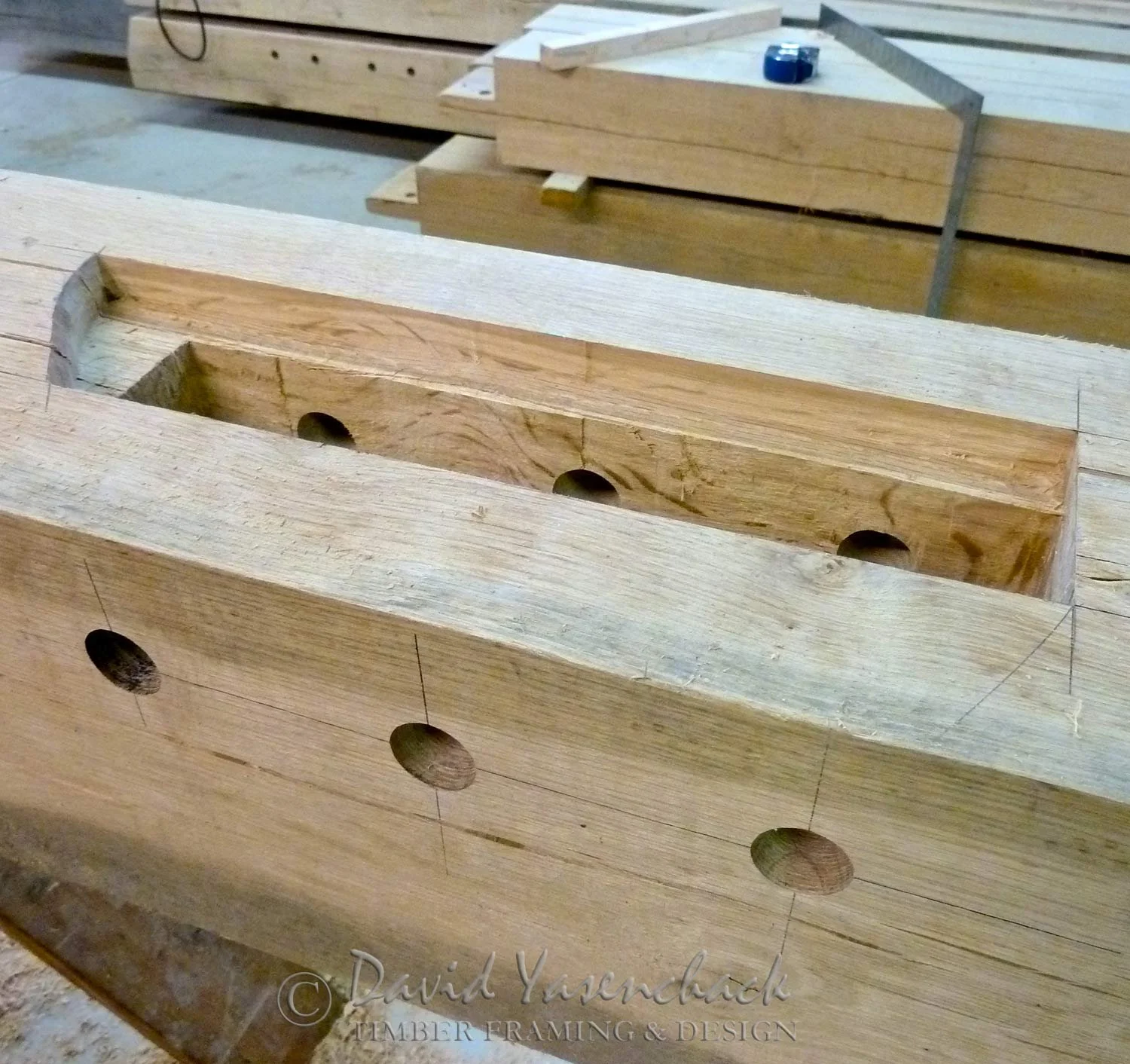
Close-up of a timber frame beam with two drilled mortises, measured with a carpenter’s ruler.

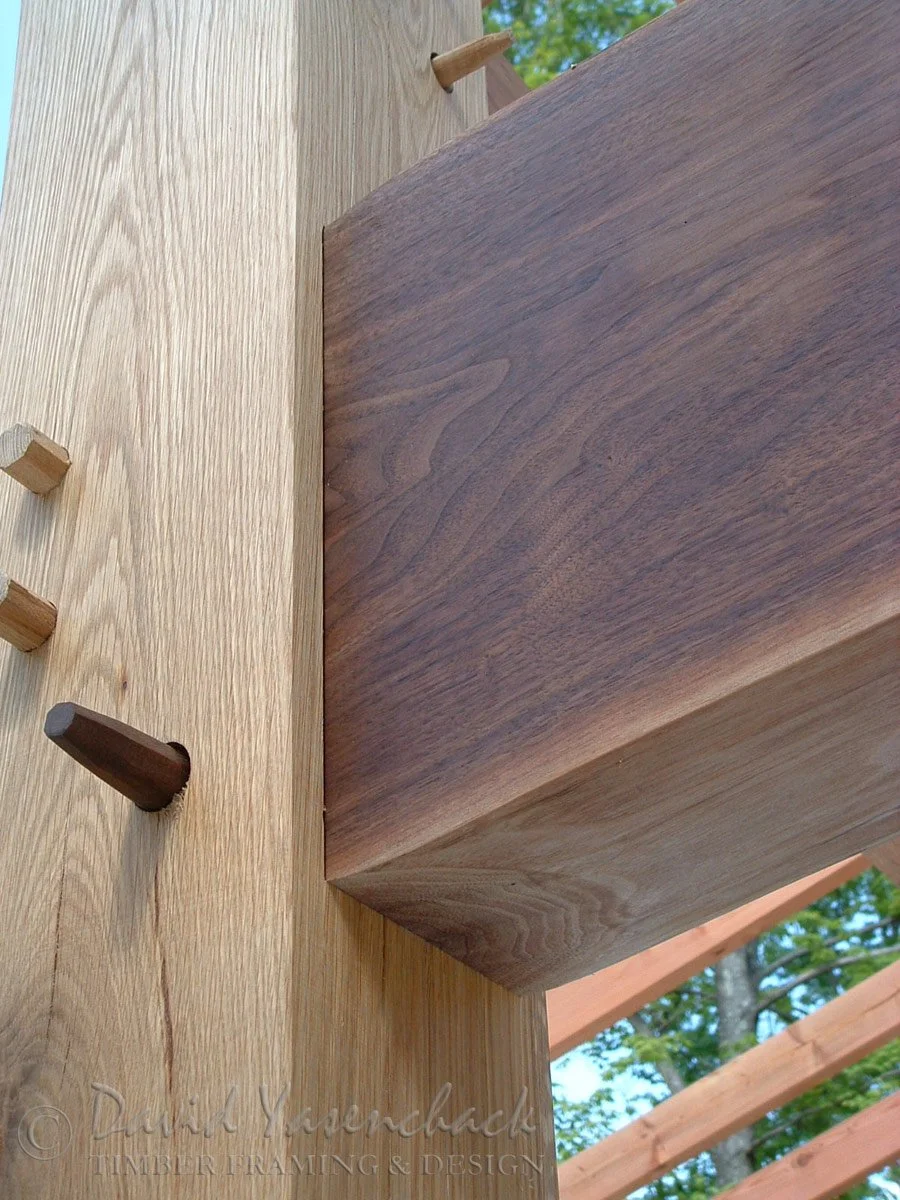
Draw-boring is ubiquitous throughout our joinery. It’s an ancient technique that is wonderfully efficient and effective at drawing joints powerfully together using tapered pegs. It also makes assembly and raising faster and safer. Baffling why some eschew this potent technique.
Close-up of timber framing beams with hand-cut mortises and joinery in a woodworking workshop
Close-up of a handcrafted wooden timber frame joint with dark walnut beam and exposed wood pegs

Because our local forests are predominantly hardwoods, we began our practice using them. While hardwoods are more challenging to cut and shape than softwoods, we use them for prominent timbers because of their rich colors and graining.

Indeed our frames often include a variety of hardwoods—especially oak, cherry, & walnut— as well as locally grown softwoods (hemlock, white pine, and larch-both European and Japanese varieties planted regionally during the 1930’s). When certain frames demand it, we have purchased Douglas fir timbers from the western states or Canada. But that is the exception.
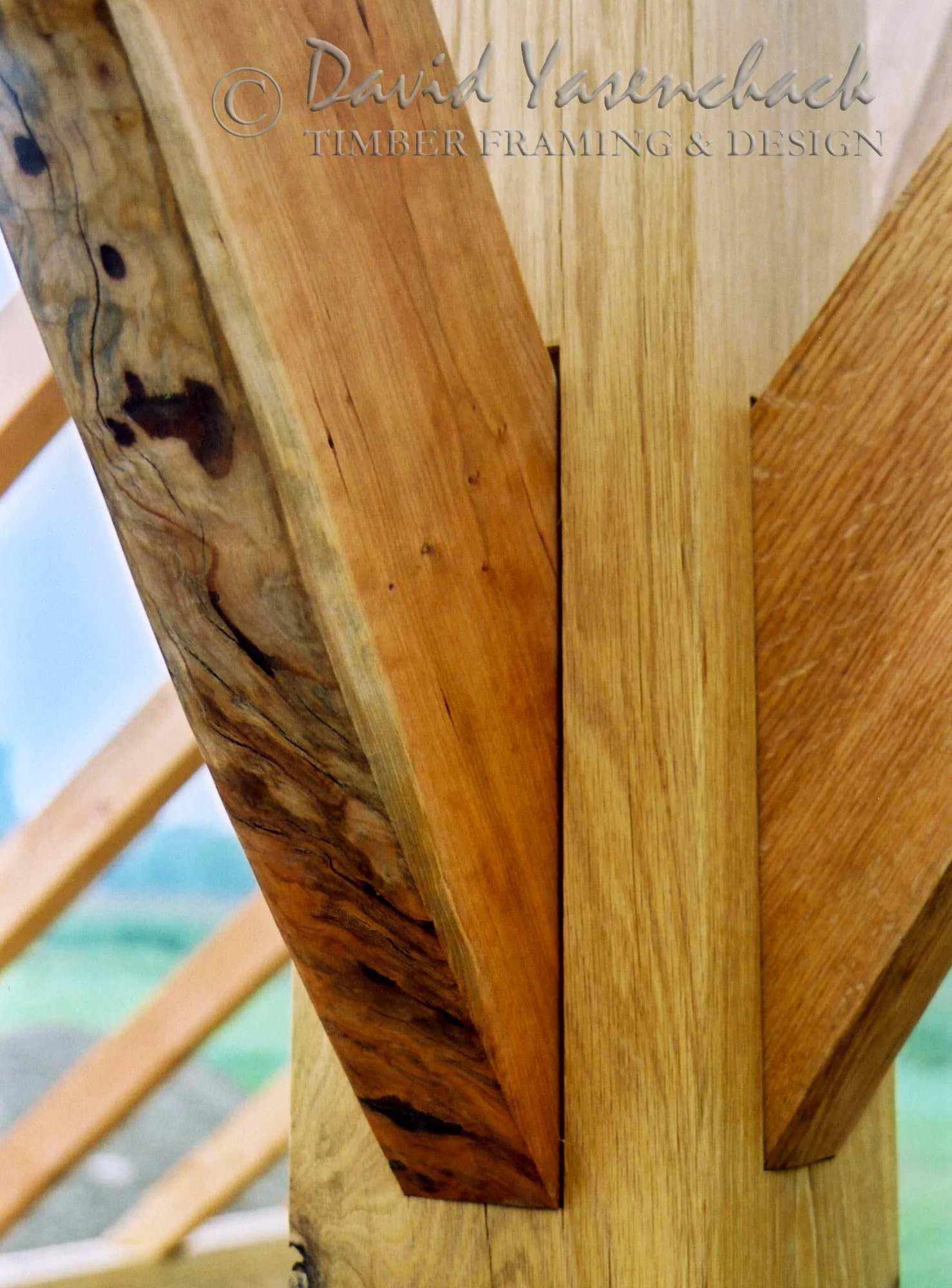
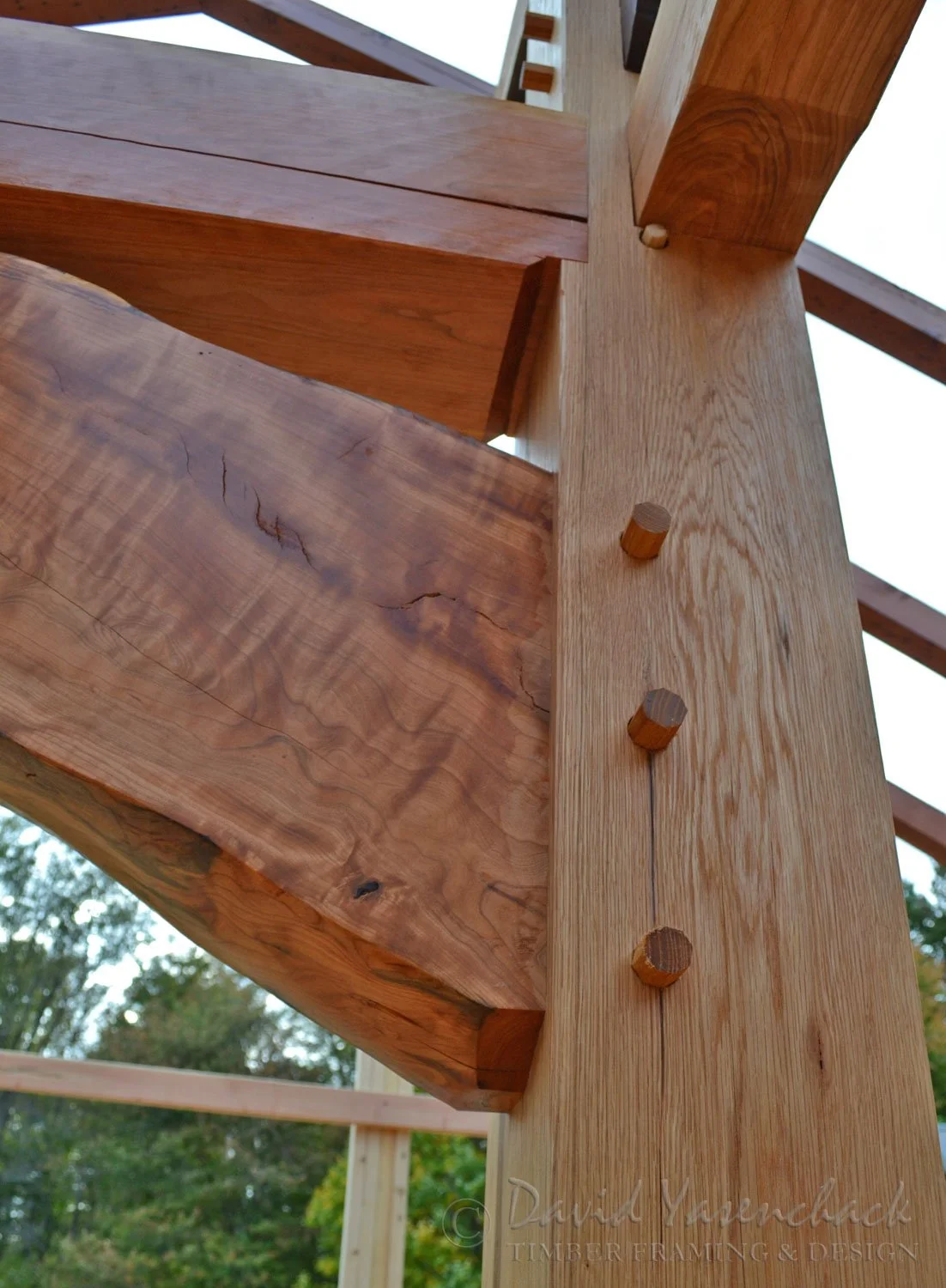
Close-up of assorted natural wood timber samples with varied grain patterns and tones
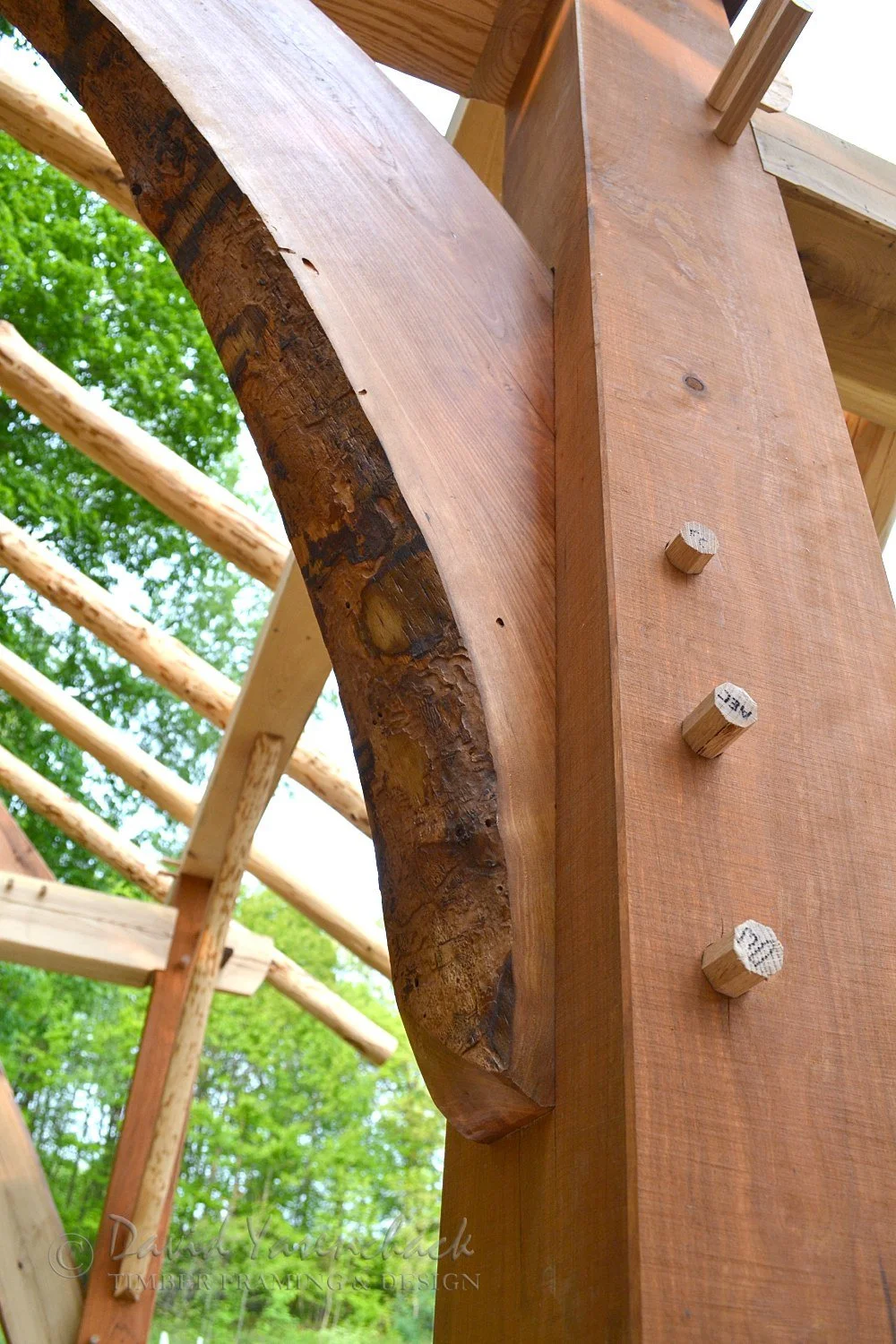
Close-up of a traditional timber-frame structure showing hardwood beams joined with exposed wooden pegs.
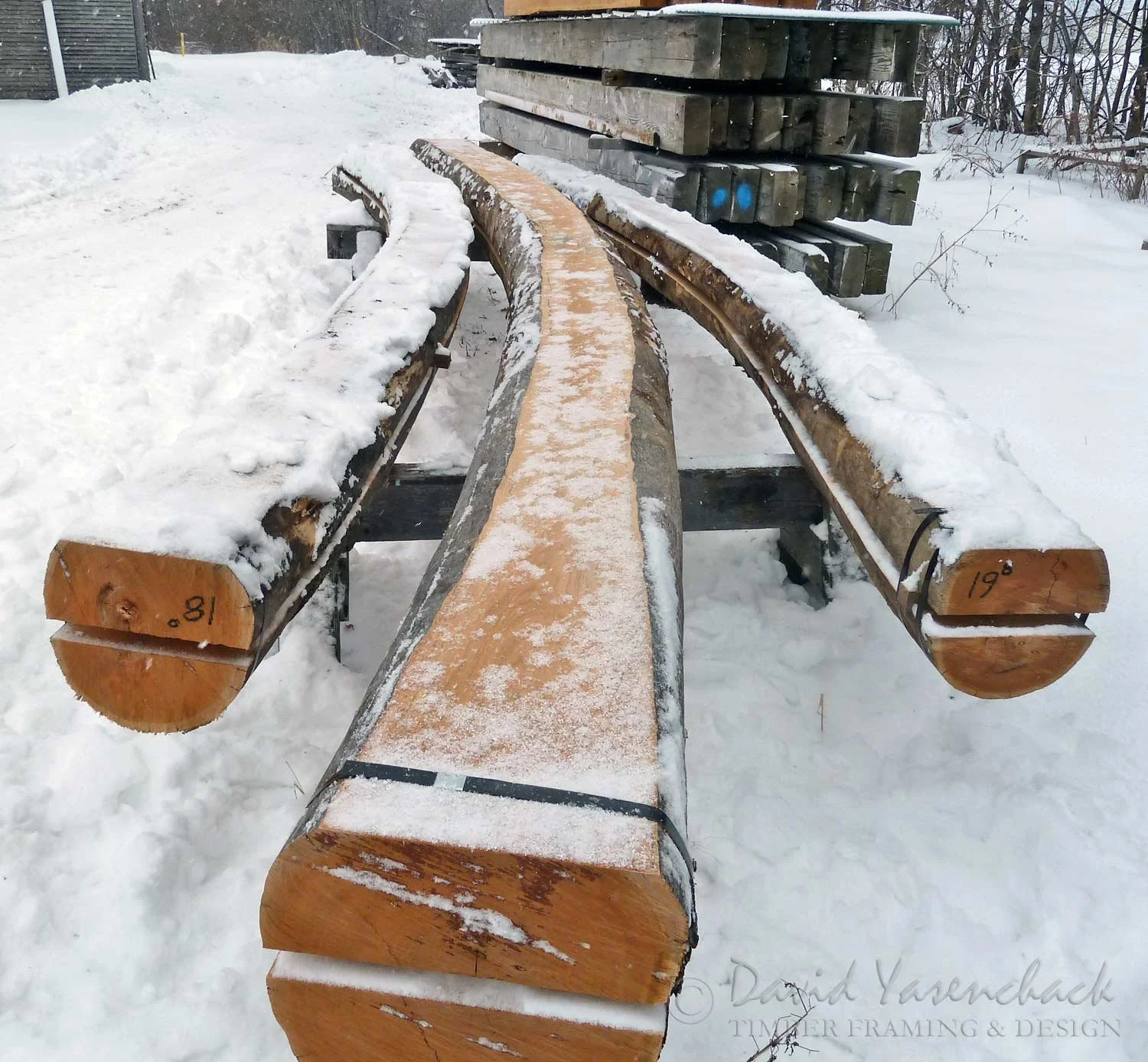
Snow-covered timber beams stacked outdoors at a winter lumber yard.
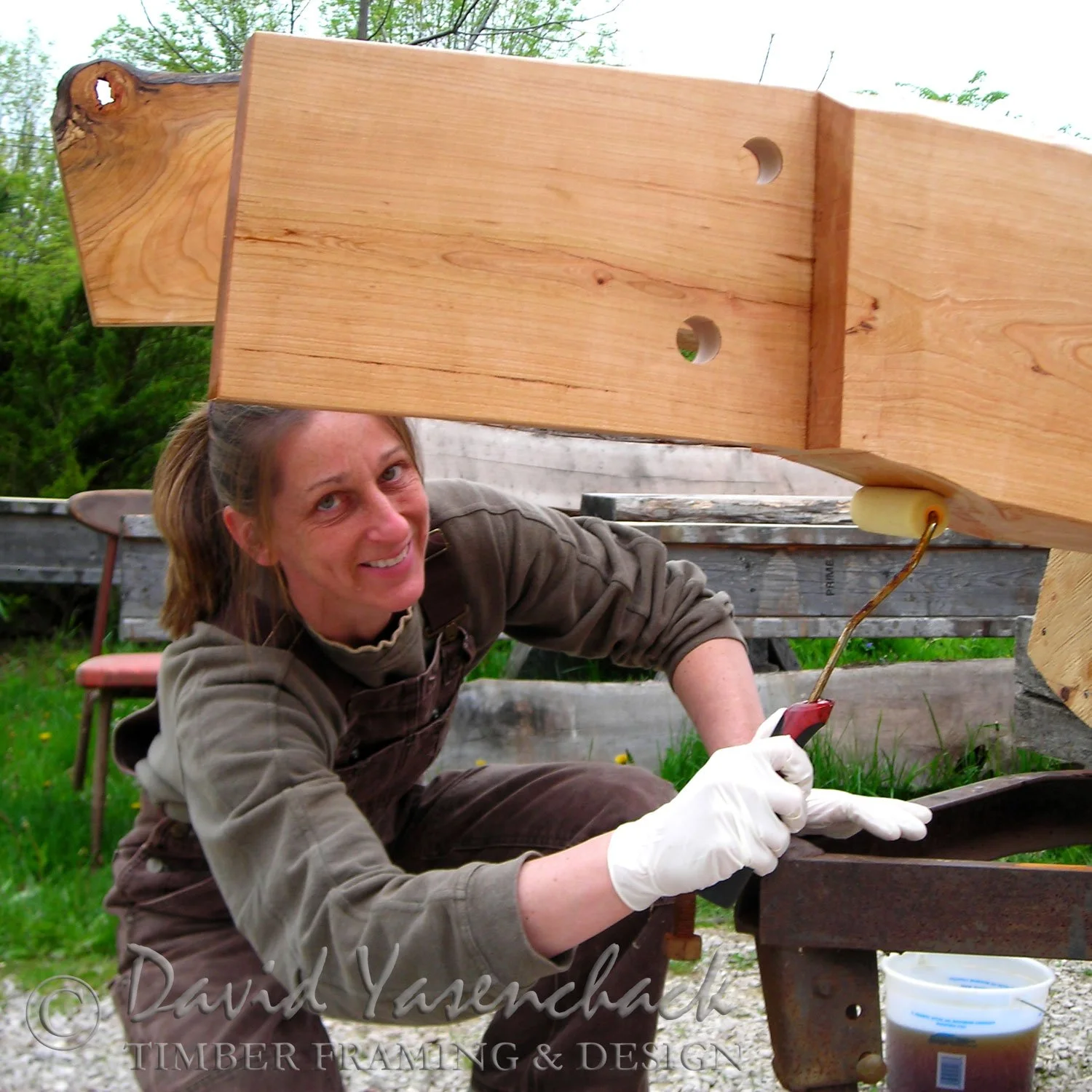
Woman in white gloves woodworking a large wooden timber frame outdoors
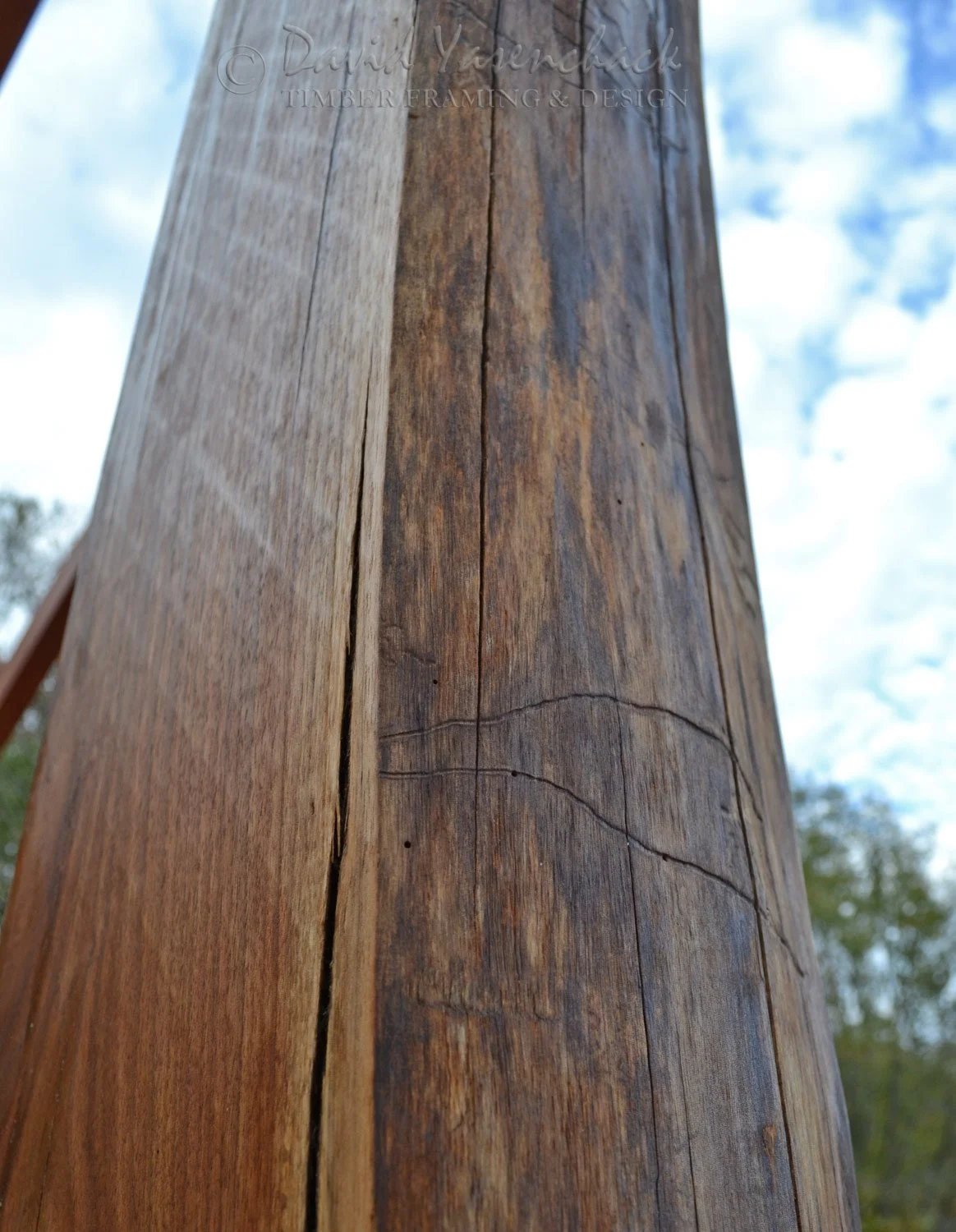
Close-up of weathered timber pole with deep vertical cracks and natural wood grain against a blue sky

In our work, you may notice that we pay careful attention not only to the fit of our joinery, but also to the surfaces of our timber and the finishing of those surfaces. The textures and finishes can vary, but we consider them our responsibility, and a signature of our aesthetic.

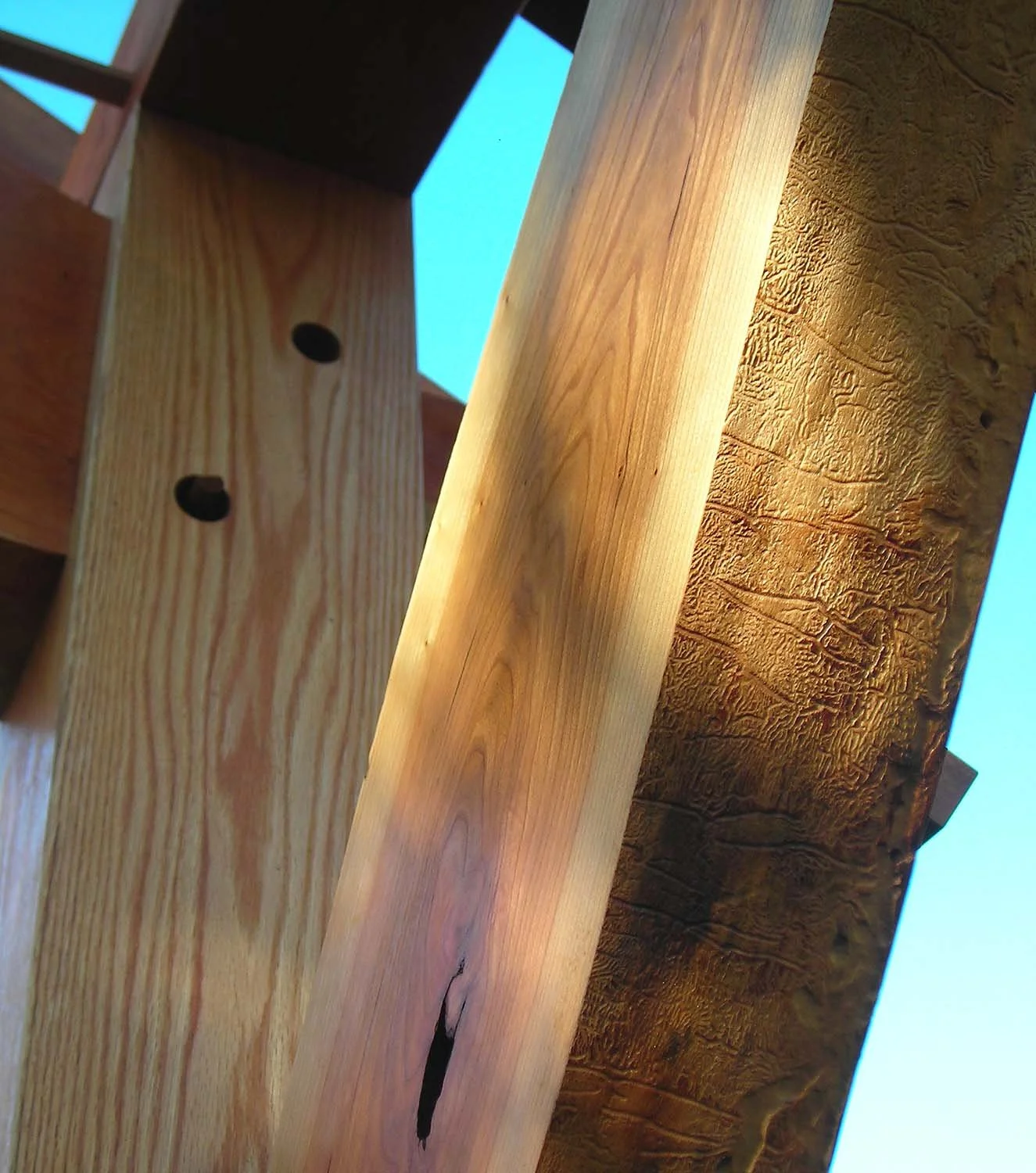
Admittedly, I find the cambium layers of certain hardwoods nothing short of sexy, and work to reveal and display what I find seductive.
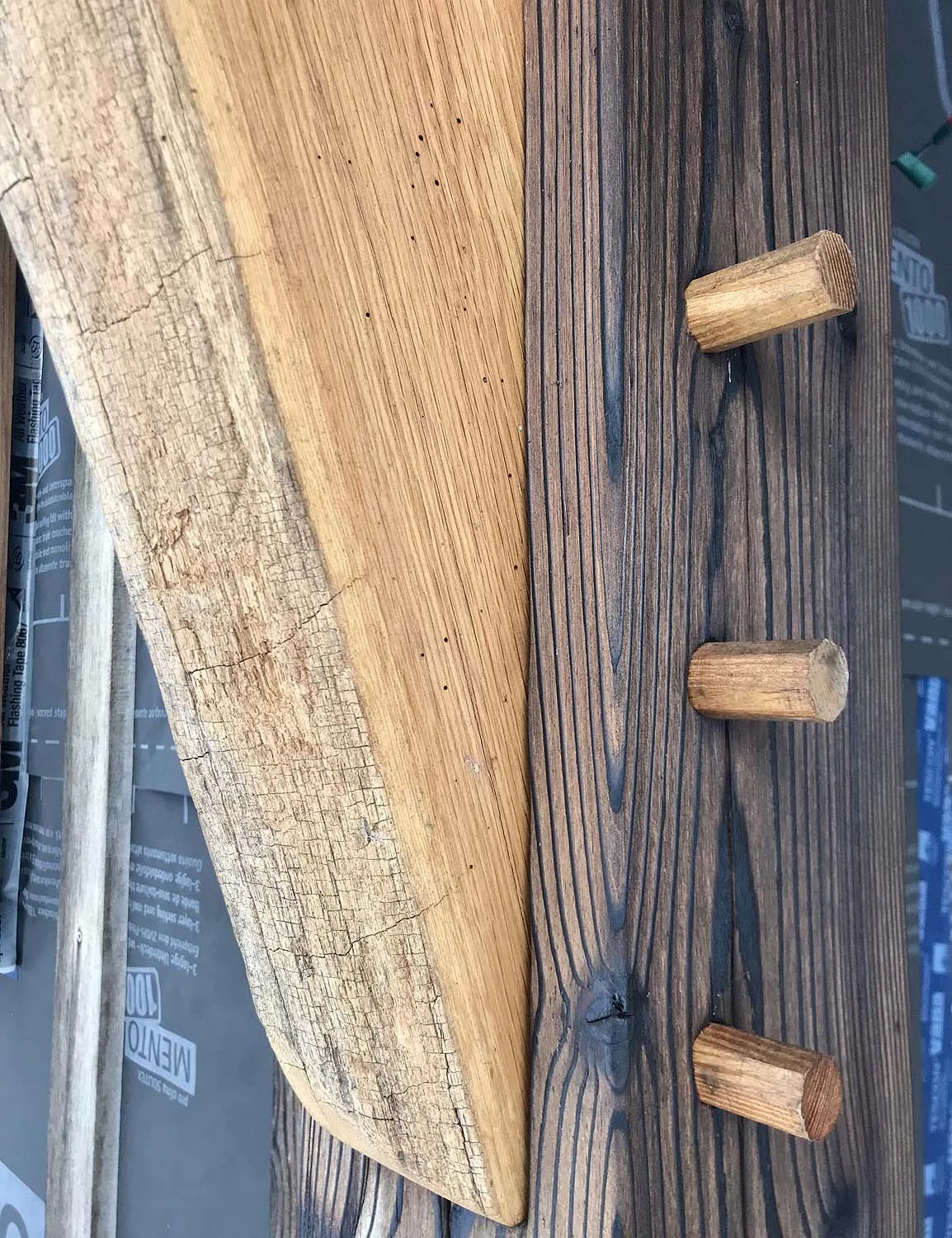
Close-up of contrasting wood samples, including reclaimed timber and a dark wood panel with wooden dowels.
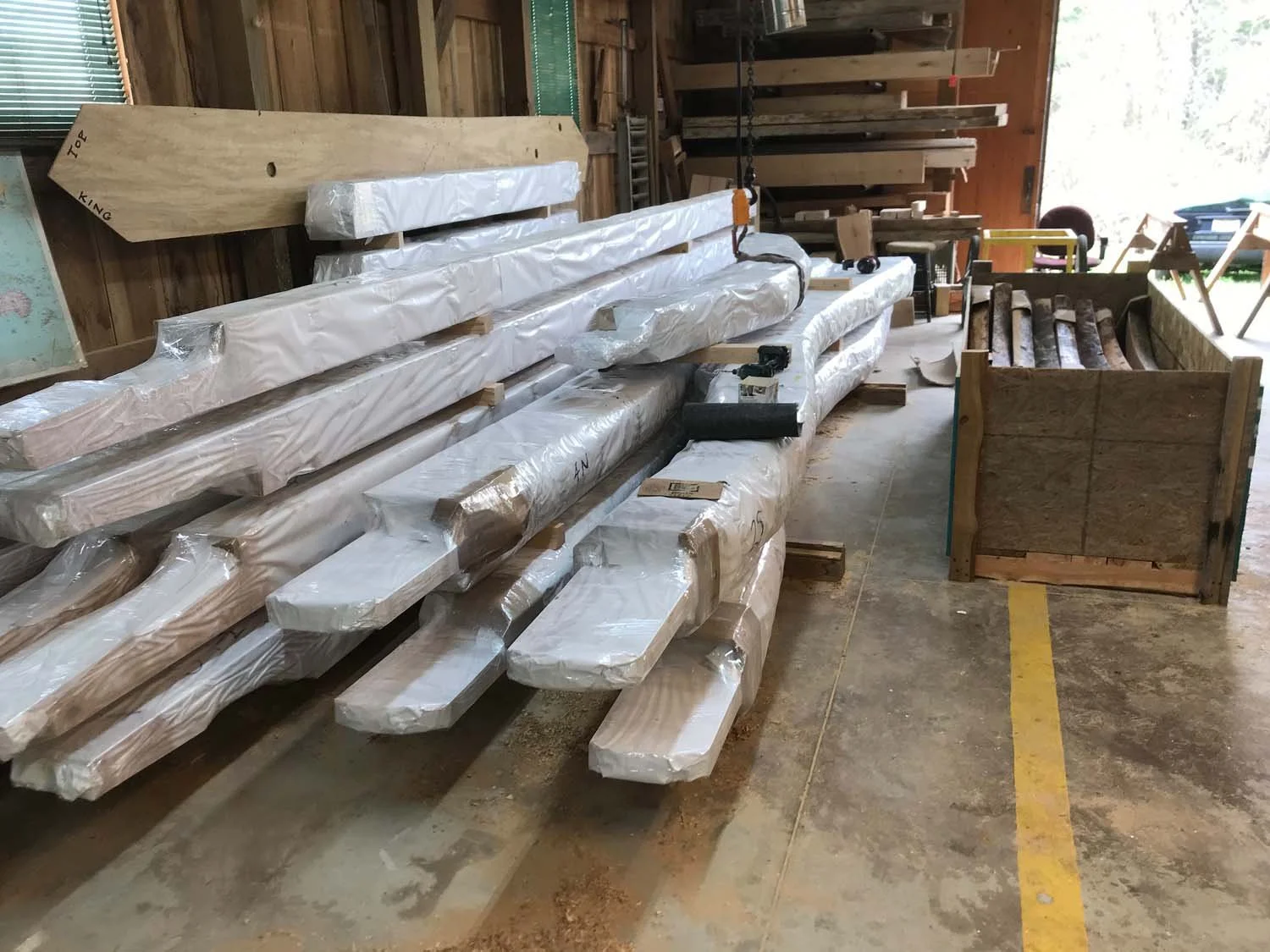
Woodworking shop with numerous plastic-wrapped wooden boat parts and lumber stacked on workbenches and pallets
Close-up of traditional timber-frame construction with hand-hewn wood beams, mortise-and-tenon joinery, and visible peg fasteners.
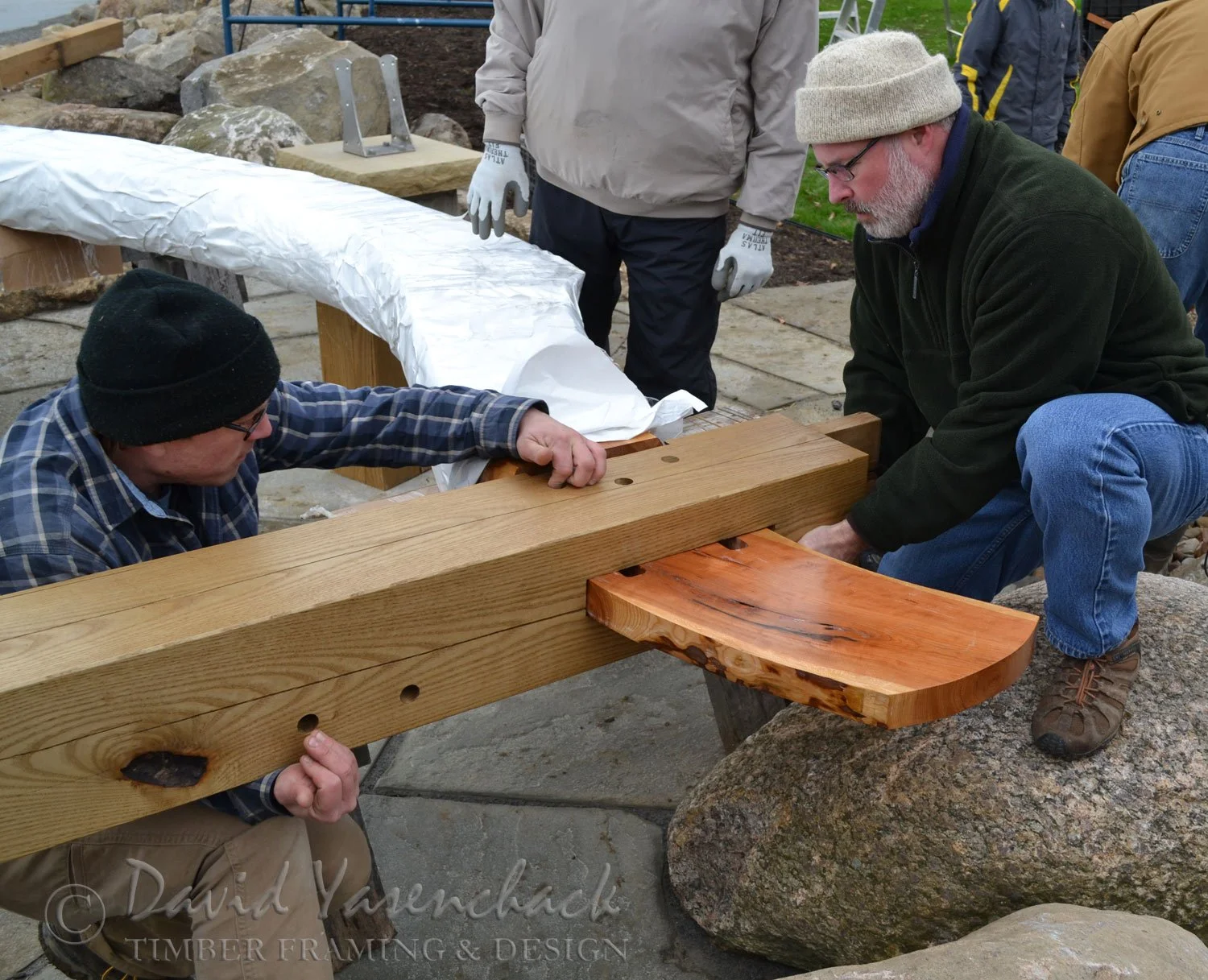
Workers assemble a timber frame bench or structure outdoors using large wooden beams.
Close-up of wooden beams and textured bark forming a rustic outdoor structure against a bright blue sky